What a Chimney Pan and Shroud Actually Are
On a framed chimney (the boxed-in “chase” you see on most North Georgia homes rather than a solid masonry stack), the top is closed off by a chimney pan, also called a chase cover. This is a flat or sloped sheet-metal lid that fits over the top of the chase with turned-down edges, openings cut precisely for the flue pipes, and a built-in slope or cricket so rain and snowmelt drain off rather than pooling. The pan is the single most important waterproofing detail on the entire chimney, and a failed pan is one of the most common hidden sources of a chase leak.
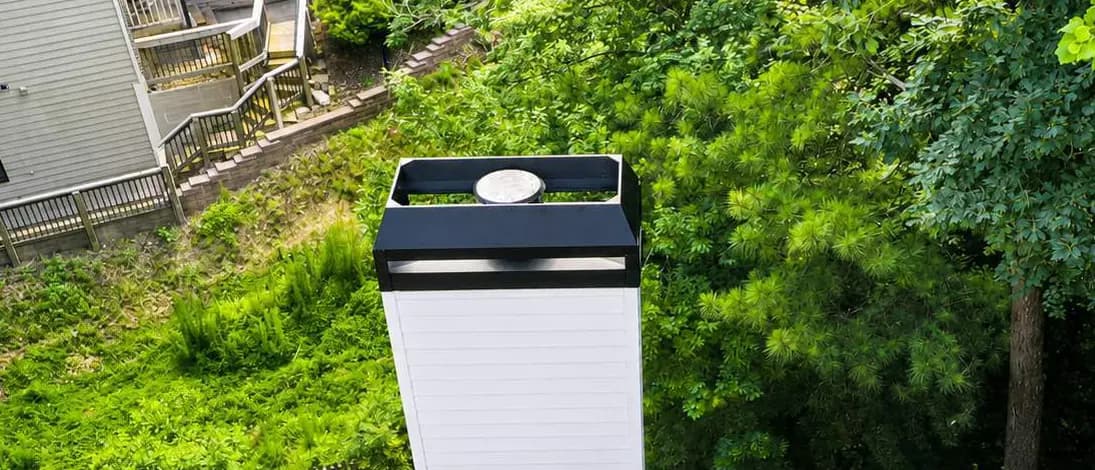
A shroud is the decorative metal cap that sits above the pan and surrounds the flue. Where a basic flue cap is purely functional, a shroud is an architectural element: a custom hood that hides the flue pipes, shields them from weather and downdrafts, keeps animals out, and gives the chimney a finished, upscale appearance. Together the pan and shroud turn an exposed, builder-grade chase into a watertight, polished feature of the roofline.
Why Adding a Shroud Is Worth It
A properly designed shroud improves draft and ventilation. By shaping the airflow around the flue terminations, it can help combustion gases and smoke exit more efficiently and reduce the wind-driven downdrafts that push smoke back into the home on gusty North Georgia days. It also adds a real layer of weather protection: an extra shield over the pan and flue against rain, snow, and wind-driven moisture, which keeps water out of the chimney system and reduces the risk of rust, deterioration, and costly interior repairs.
A shroud also keeps out animals and debris. The mesh and overhang of a well-built shroud stop birds, squirrels, leaves, and twigs from nesting in or blocking the flue, which is both a safety concern and a fire risk. By shielding the pan and chase cover from direct exposure, a shroud extends the life of the cap and the flue beneath it, slowing the wear and corrosion that age an unprotected chimney. And finally, it enhances the appearance of the home: a decorative shroud gives the chimney a custom, finished look that complements the architecture and noticeably lifts curb appeal, which is why many homeowners add one even when the chimney isn’t leaking.
Materials We Fabricate
We build chimney pans and shrouds from materials matched to your home, your budget, and the exposure of your roof. Galvanized and Galvalume steel are durable, cost-effective workhorses that we finish in a baked-on color to coordinate with the roof or trim. Stainless steel resists rust indefinitely and is our recommendation for a permanent, maintenance-free pan that outlives the cheaper aluminum chase covers many builders install. For estate and luxury homes, copper develops a distinctive patina and becomes a true architectural statement.
The failure we see most often is the thin, flat aluminum chase cover that builders install at construction. It ponds water, corrodes at the seams, and rusts through within a decade, dumping water straight into the chase. When we replace one, we step up the gauge of the metal, add a proper slope or cricket so water always drains, and seal every flue penetration with a high-temperature collar. The result is a pan engineered to outlast the roof it sits on.
Custom Fabrication and Proper Fit
No two chimney chases are exactly alike, so we measure and fabricate every pan and shroud to fit your specific chimney rather than forcing a stock part to work. We capture the chase dimensions, the flue locations and heights, and the roof pitch, then build the pan with the correct overhang and drip edge and the shroud with the right proportions for the size and style of the chimney. A shroud that is too small looks like an afterthought; one built to scale looks like it was always part of the house.
Fit is also what makes the system watertight. A pan that doesn’t fully cover the chase, lacks a slope, or has loose flue openings will leak no matter how good the metal is. We detail the turned-down edges so wind-driven rain can’t get underneath, slope the surface so nothing ponds, and flash the assembly into the surrounding roofing where the chase meets the roof so water sheds around the chimney instead of behind it.
Chimney Pans, Shrouds, and Full Chase Rebuilds
Installing a new pan and shroud is often the finishing touch on larger chimney work. When a chase has been leaking for years, the framing, sheathing, and siding underneath are frequently rotted, and a new cap alone would simply trap that damage. In those cases we open up the chase, dry it out, reframe and re-wrap the structure, and finish it with new siding, step flashing, and a counter-flashed cricket before the new pan and shroud go on top. From a single replacement chase cover to a full chimney chase rebuild on a North Atlanta estate, this is detailed metal-and-flashing work on the most leak-prone part of the roof.
Because Platinum Roofing handles the roofing, the flashing, and the custom metalwork in-house, one fully insured local company is accountable for the whole chimney, not a roofer who points at a sheet-metal shop and a mason who points back. Founded in Canton in 2000 and led by fourth-generation roofer Robert Shelby, we treat the chimney as part of the roof system it penetrates, which is exactly how it has to be detailed to stay dry.