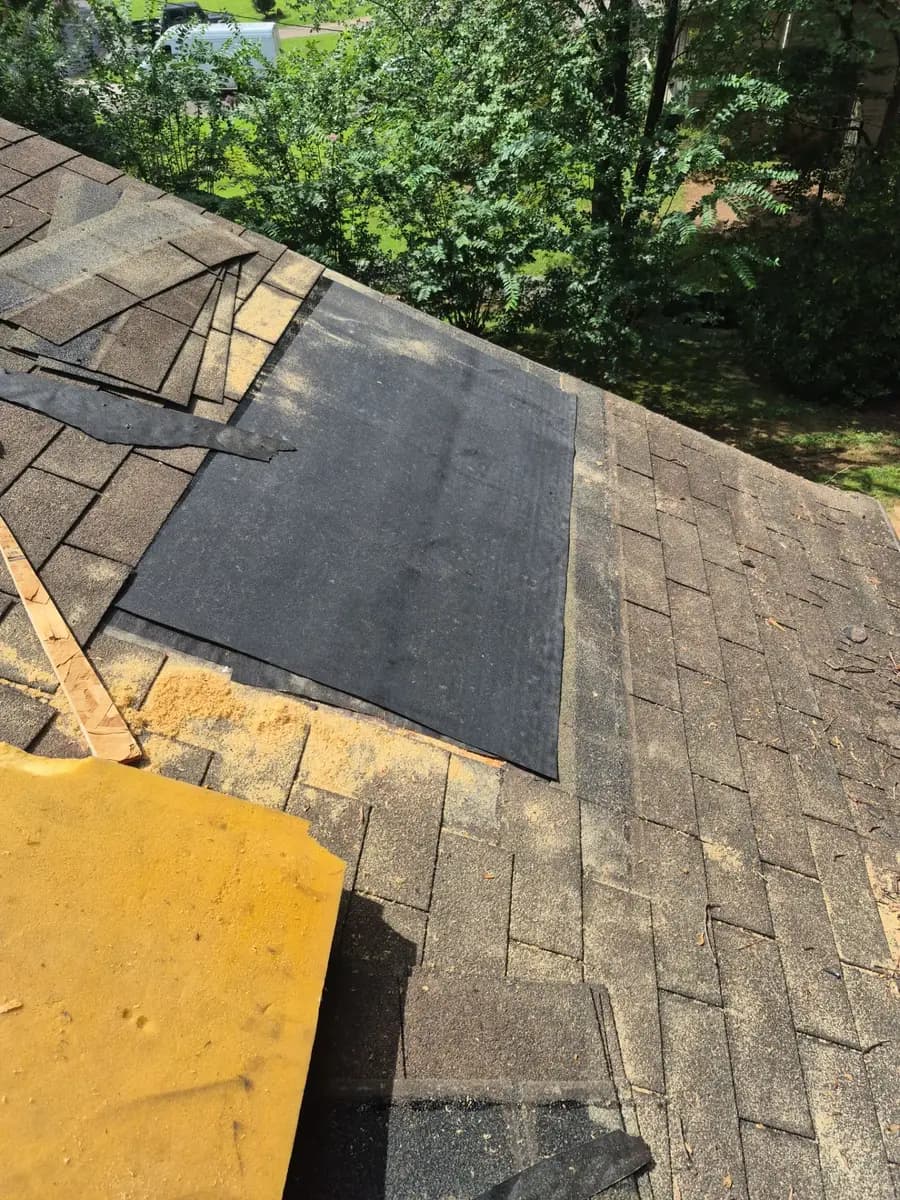
Roof Repair
Why Your Roof Leaks Around the Chimney (and How We Actually Fix It)
By David Blackwell · July 12, 2026 · 13 min read
When a homeowner calls us about a ceiling stain, a bubbling paint spot, or a drip that only shows up in a hard rain, the first question I ask is where the water is landing inside the house. If the answer is anywhere near the fireplace wall, I already have a good idea what we are going to find on the roof. I run the crews at Platinum Roofing, and if I had to name the one spot that sends us out on more leak calls than any other, it is the chimney. Not the roof field, not the ridge, the chimney.
Here is the part that surprises people. In almost every case, the bricks or the siding on the chimney are fine. The leak is coming from the metal and the seals that tie the chimney into the roof, and that metal has a lifespan just like your shingles do. Once you understand how the joint is built, the leak stops being a mystery and starts being a straightforward repair.
Why the Chimney Leaks Before Anything Else
A roof leak almost never starts in the middle of a clean run of shingles. It starts where something interrupts the roof: a pipe, a vent, a valley, a skylight, or a chimney. Those interruptions are called penetrations, and every one of them has to be sealed by hand with layered metal flashing. The chimney is the biggest penetration on most houses, it has four sides for water to attack, and it usually sits partway down a slope where a lot of roof is draining straight toward it. That combination is why it leads every list.
Here is roughly how the leak calls we trace break down across North Georgia.
Nearly every one of those sources is a penetration or a seam, and the chimney sits at the top of the list on its own. So when we come out for a leak, the chimney is the first place we look, and it is the first place I would want you to understand.
It Was Never the Bricks: The Chimney Is a System of Metal
Walk up to a chimney and you see brick or siding. The part actually keeping water out is mostly hidden, and it is metal. There are four separate pieces of it, each doing a different job, and a failure in any one of them puts water in your house.
The base and step flashing is the layered metal woven into the shingles all the way around the base. The counter flashing sits above it, tucked into the wall or behind the siding, and laps down over the step flashing so water cannot get behind either one. On top, the crown or chase cover is the lid that keeps rain out of the structure itself. And behind the chimney, on the uphill side, there should be a cricket, a small ridge that splits the water and sends it around the chimney instead of letting it pile up against the back wall. When these four are built right and are in good shape, a chimney is bone dry in the worst storm we get. When one of them fails, you get a stain on your ceiling.
Why a Tube of Caulk Always Loses
The most common thing we find on a leaking chimney is a bead of caulk or a smear of roofing tar someone applied to a gap. I understand the instinct. You see a crack, you seal the crack. The problem is that caulk is a coating, not a flashing, and it is being asked to do a job it physically cannot hold.
Flashing works by overlapping layers and gravity, so water is always directed down and out over the top of the next piece, with no seam facing uphill for it to sneak into. Caulk works by sticking to two surfaces at once. Your roof moves. It expands in July heat, contracts on a January night, and the chimney and the shingles move at different rates. Caulk is rigid, so every one of those cycles works it loose, and within a season or two you have a hairline gap that funnels water to the exact spot the caulk was supposed to protect. A tarred-over chimney is not a repaired chimney. It is a leak on a delay, and it usually hides the rot happening underneath until the ceiling gives it away.
The Parts That Actually Fail
When we pull a leaking chimney apart, the failure is almost always one of these, and often more than one at the same time.
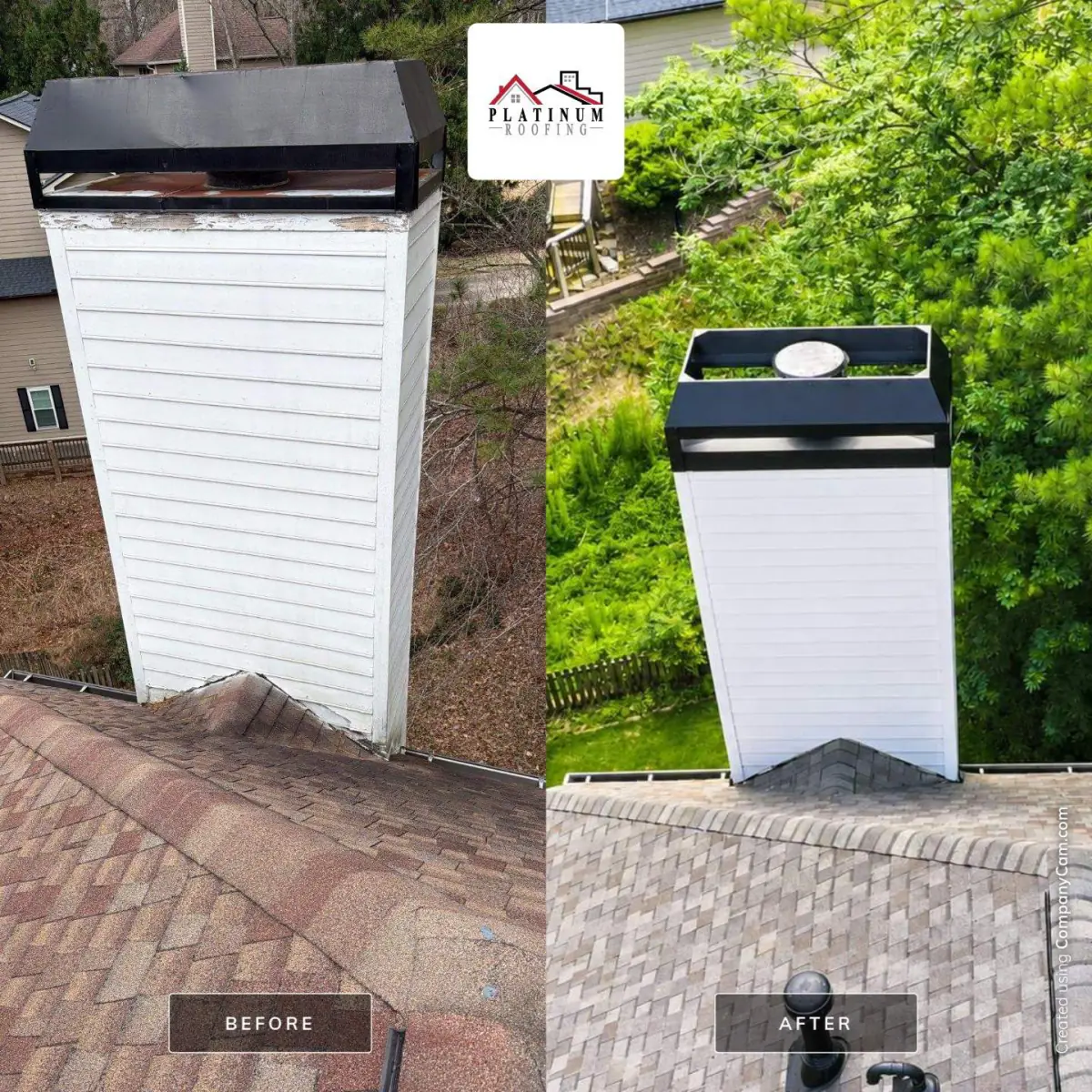
- The chase cover or crown. On a framed chimney, the chase cover is the metal pan on top. Builder-grade covers are often thin galvanized steel with a low spot in the middle that holds water, and they rust through and leak down the inside of the chase. On a masonry chimney, the concrete crown cracks with age and lets water into the brick. Either way, the lid is gone and the whole structure is drinking.
- Rusted or short flashing. Old flashing corrodes, and a lot of it was cut too short or never woven into the shingles properly in the first place. Once the metal is compromised, no sealant on earth will save it.
- A missing cricket. On wider chimneys sitting across a slope, skipping the cricket is a classic builder shortcut. Water dams up behind the chimney, sits there, and eventually finds its way in. Adding a proper cricket is often the single fix that ends a back-wall leak for good.
- Rotted framing underneath. This is the one that turns a small repair into a real one. By the time water has been getting in for a while, the wood chase framing and the roof decking around the chimney are soft. You cannot flash to rotten wood, so we have to rebuild the structure before we can make it dry.
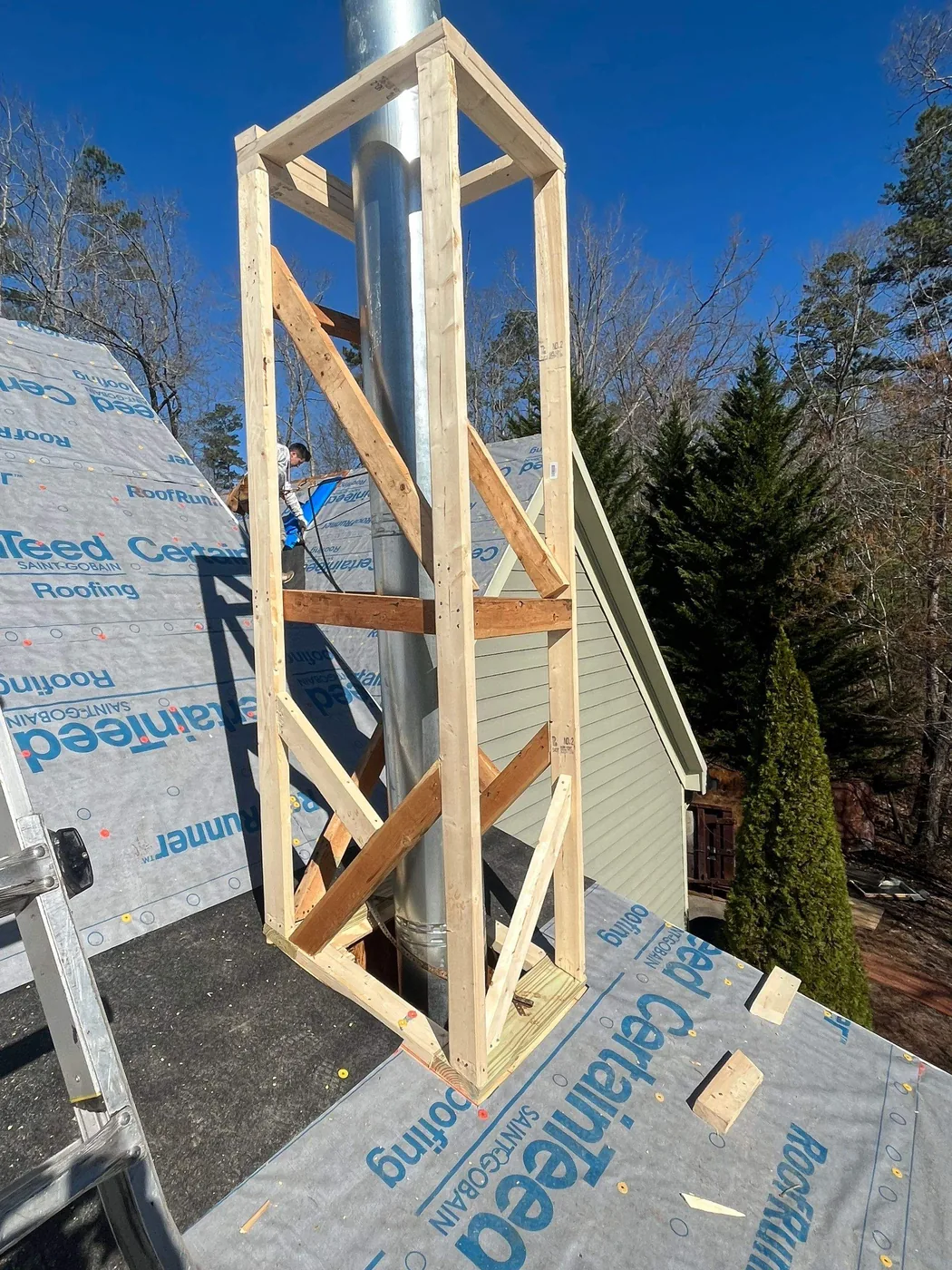
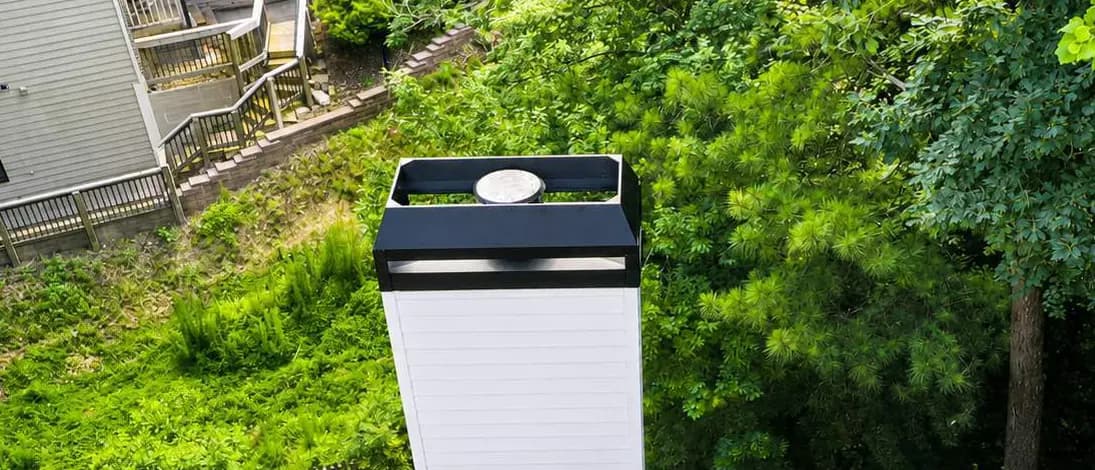
That photo is a chimney we reframed. The old structure was too far gone to flash, so the crew rebuilt the chase from the decking up, set the flue properly, and only then started installing new metal. That is the difference between fixing a leak and covering one.
How We Fix It So It Stays Fixed
A chimney leak done right is not a caulk job, it is a rebuild of the joint. Here is what our crews actually do on a full chimney pan and shroud repair.
We start by removing the old flashing and any rotted wood, right down to sound framing and clean decking. We rebuild the chase or repair the framing where the water got in, then dry it in with new underlayment so there is a waterproof layer under everything. New base and step flashing gets woven into the shingles course by course, the way it should have been from the start, and new counter flashing laps over the top of it. If the chimney needed a cricket and did not have one, we build it. Up top, we fabricate a new chase cover or shroud, sloped so water sheds off instead of pooling, and finish the sides so the whole thing looks sharp and sheds water for decades.
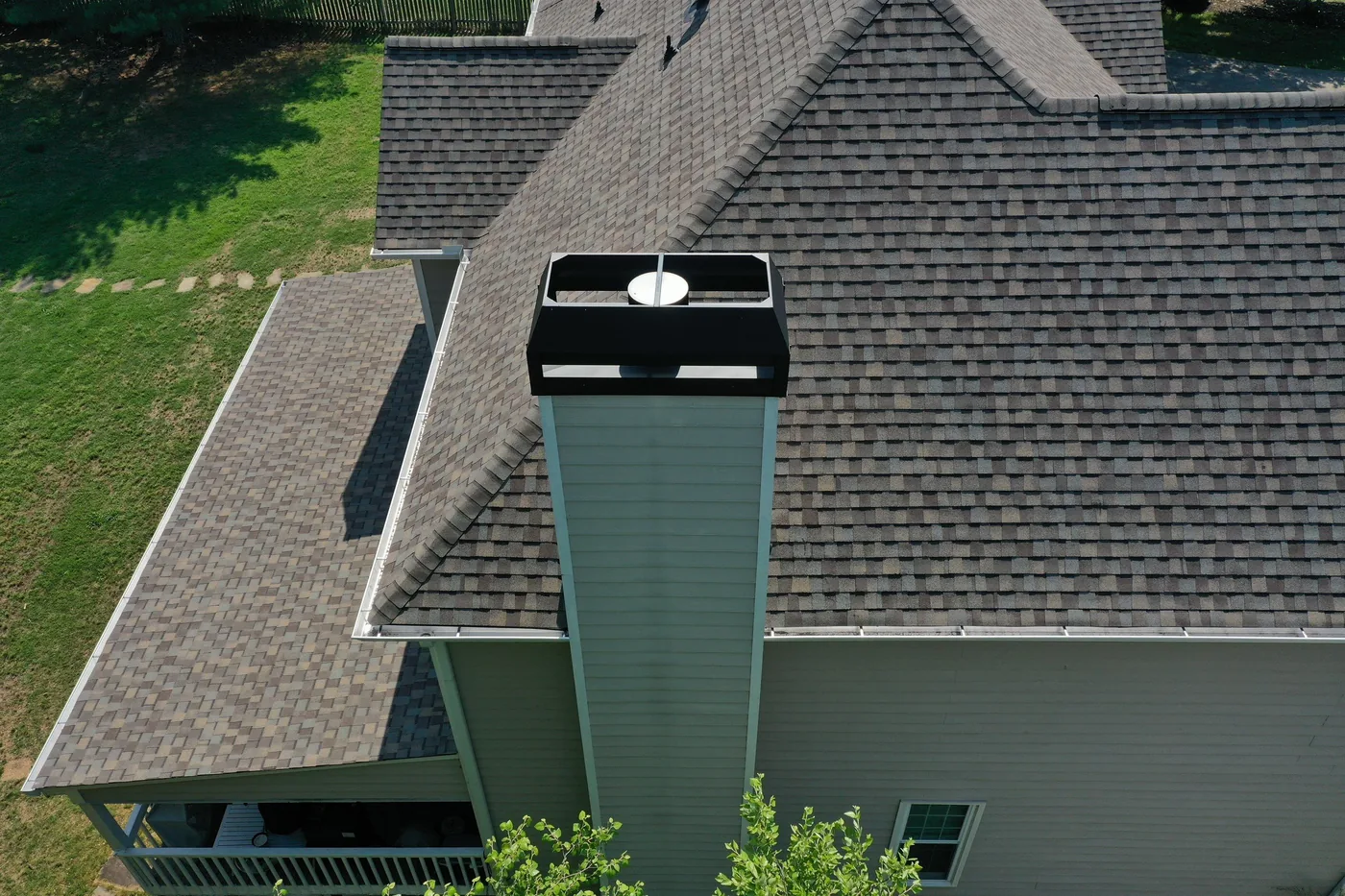
The result is the boring outcome you want: a chimney you never think about again. No stain that creeps back the next spring, no annual re-caulking, no wondering if this is the storm that finally soaks the drywall. If your leak is active right now and rain is in the forecast, this is also exactly the kind of call our emergency roofing crew handles, so the inside of your home is protected while we schedule the permanent fix.
Signs Your Chimney Is the Leak
You do not have to climb on the roof to have a strong hunch. From inside and from the ground, these are the tells:
- A ceiling or wall stain near the fireplace or the chimney chase, especially one that darkens after rain.
- Peeling paint or crumbling drywall on the wall the chimney runs through.
- A musty smell or damp spot in the attic around the chimney penetration.
- Rust streaks, a sagging chase cover, or standing water you can see on top of the chimney from the ground or a window.
- White staining or flaking brick on a masonry chimney, which means water is moving through it.
If any of that sounds like your house, get it looked at before the next round of storms. A chimney leak never improves on its own, and every rain adds to the rot bill underneath.
The Bottom Line
The chimney is the most common leak on a roof, and the good news buried in that is that it is almost always fixable without touching the rest of the roof. The bricks are usually fine. The metal and the seals are the whole story, and metal and seals are exactly what we rebuild. The homes that end up needing a new ceiling, new insulation, and new framing are the ones where a small flashing problem got a tube of caulk instead of a real repair and quietly rotted for a year.
If you have a stain near the chimney or you can see a tired chase cover from the yard, let us take a look. Platinum Roofing repairs and rebuilds leaking chimneys across Canton, Woodstock, Holly Springs, and the greater North Atlanta metro, and we give free, no-pressure inspections everywhere in our service areas. Call us at (770) 419-5714 or contact us, and we will get on the roof, trace the leak to its real source, and give you a straight answer on what it takes to make it dry. You can also read more about Platinum Roofing and how we handle every roof repair we take on.
Frequently Asked Questions
Why does my roof only leak around the chimney and nowhere else?
Because the chimney is the biggest interruption in your roof, and interruptions are where roofs leak. A clean field of shingles sheds water easily. The chimney has four sides, sits in the path of draining water, and depends entirely on layered metal flashing to stay sealed. When that flashing ages, corrodes, or was installed short, water gets in there long before it would anywhere else on the roof. The rest of your roof leaking nowhere is normal. The chimney is simply the weak point.
Can I just caulk or tar my chimney flashing to stop the leak?
It might slow it for a season, but it will not fix it. Caulk and roofing tar are rigid coatings, and your roof and chimney expand and contract with the temperature at different rates, which cracks the seal within a year or two. Worse, a tarred-over chimney hides the rot happening underneath until it reaches your ceiling. Real flashing works by overlapping metal and gravity, not adhesive, which is why it lasts decades and a bead of caulk does not.
What is a chimney cricket and do I need one?
A cricket, sometimes called a saddle, is a small ridge built on the uphill side of a chimney that splits rainwater and channels it around each side instead of letting it dam up against the back wall. Wider chimneys sitting across a roof slope really need one, and skipping it is a common builder shortcut that causes chronic back-wall leaks. If your leak is on the uphill side of the chimney and there is no cricket up there, adding one is often the fix that finally ends it.
How much does it cost to fix a leaking chimney?
It depends entirely on what the water has already damaged. Re-flashing a sound chimney is a moderate repair. If the chase cover is shot, the framing is rotted, or a cricket has to be built, it costs more because we are rebuilding the structure, not just the metal. The one thing that is always true is that catching it early is far cheaper than catching it late, because the expensive part is never the flashing, it is the rotted framing, ruined insulation, and drywall the leak destroys while it waits. We give a free inspection and an honest, itemized estimate before any work starts.

About the Author
David Blackwell
Production Manager at Platinum Roofing, running the crews and quality checks on roof and seamless gutter installations across Canton, Woodstock, and the greater North Atlanta metro. Meet the Platinum Roofing team →