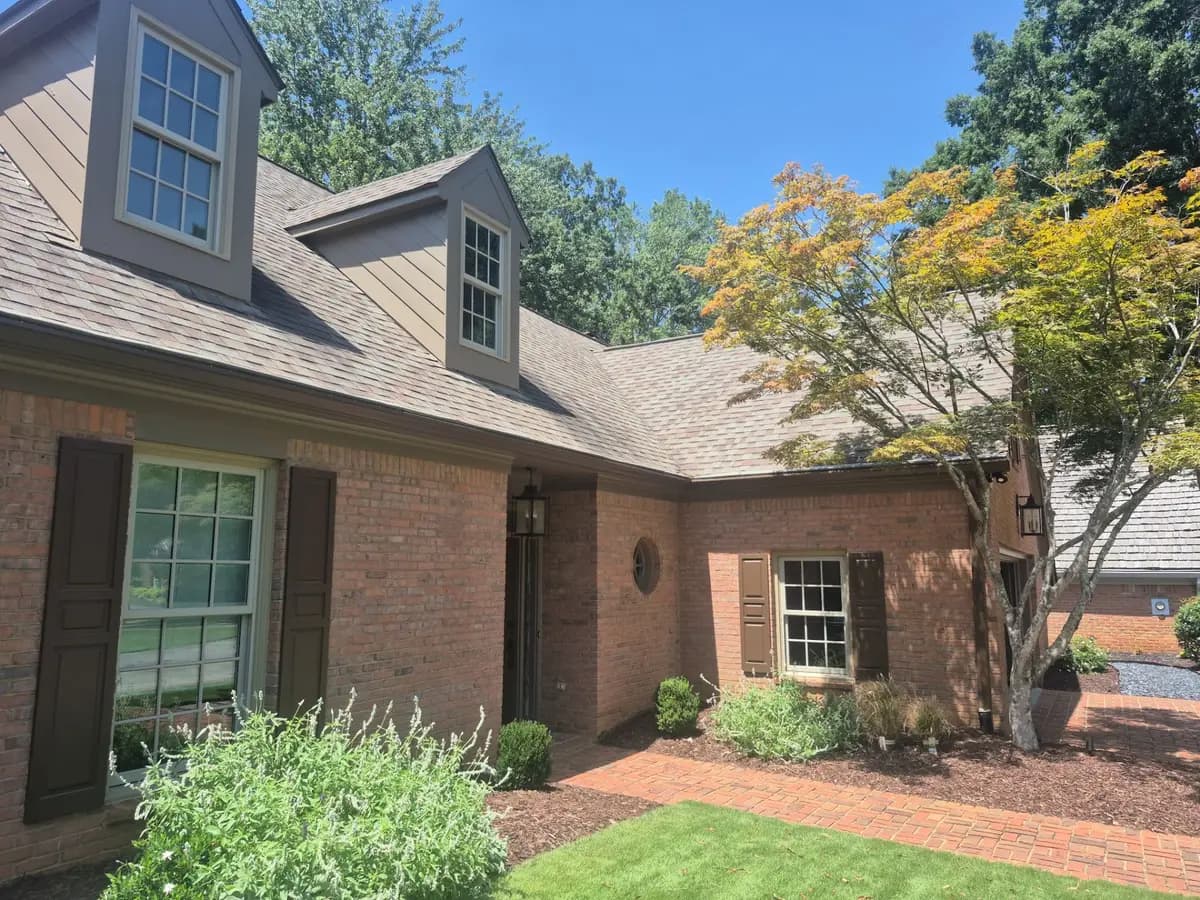
Why So Many Roswell Roofs Come Due Around the Same Time
Much of Roswell was built in waves. The subdivisions along Holcomb Bridge Road, Hardscrabble Road, and Crossville filled in during the ’90s, and a large share of those homes still carry roofs from that era or a single replacement since. The wooded ’70s and ’80s homes around Martin’s Landing are older still. When a whole neighborhood was roofed in the same few years, it tends to wear out in the same few years, and that is the pattern we see across much of Roswell right now.
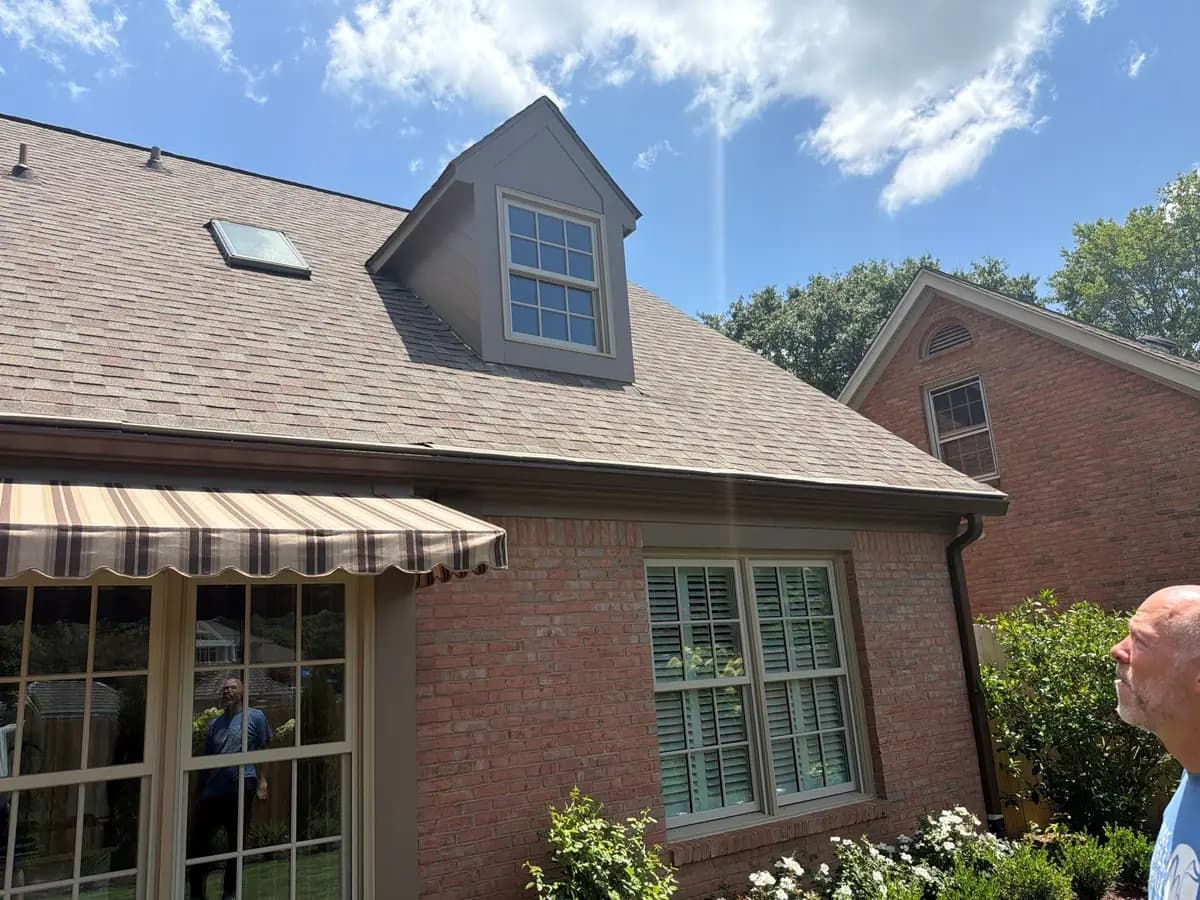
Age is only half of it. Roswell sits under some of the heaviest hardwood cover we work beneath, and the ground falls steeply toward the river, so many roofs spend most of the day in shade and dry out slowly after rain. That constant dampness feeds algae and moss on north-facing slopes, and moss holds water against the shingle mat long after the storm has passed. Add the spring hail and straight-line wind that cross North Fulton most years, and a roof here can show end-of-life signs (granules in the gutters, curled tabs, bare patches, repeat leaks) before its original rating would suggest.
None of that means every older roof needs replacing. We walk the roof, look at the decking from the attic where we can, and tell you plainly whether you are looking at a repair or a full replacement.
Materials for Historic Roswell, the River Neighborhoods, and Horseshoe Bend
Homes in and around the historic district and the Canton Street corridor often fall under design review, which can govern roofing material, color, and profile. On those houses the goal is a roof that looks right for the era of the home and still meets today’s code. Dimensional architectural shingles suit most of them, and standing-seam metal is a strong fit where the style of the house supports it. We work out what the review expects before any material is ordered, so a replacement does not stall halfway through.
Near the water, in Martin’s Landing, Willeo, and the streets along the Chattahoochee corridor, we lean on algae-resistant shingles and can add copper or zinc strips at the ridge to slow streaking. Ventilation matters even more than the shingle choice in these damp pockets, because an attic that traps moisture rots decking from below no matter what sits on top. Horseshoe Bend brings a different challenge: steeper, multi-level rooflines on established golf-community homes, where valleys and wall flashing do most of the work and the finished roof needs to hold up to the look of the neighborhood.
What a Roof Replacement Costs in Roswell
Most asphalt shingle replacements in Roswell land between about $9,000 and $18,000. Larger homes in Horseshoe Bend and historic-district houses with steep, multi-level rooflines can go above that range. The number for your house comes down to the roof’s size in squares, its pitch, how many old layers come off, how much decking turns out to be soft once the shingles are gone, and the shingle grade you pick.
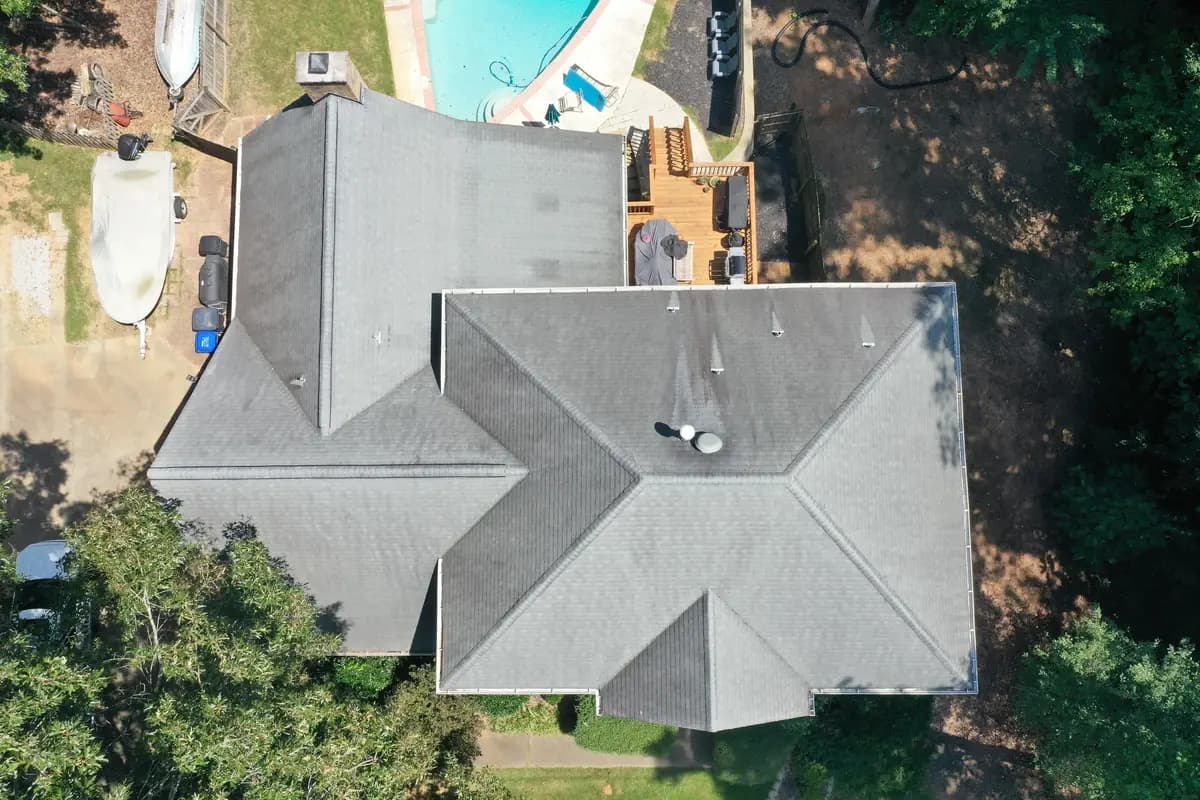
Roswell’s walk-out lots and stacked rooflines push complexity up on a lot of homes, which is why a neighbor’s price is a poor guide to yours. For a measured figure on your own address, use our instant roof quote: it reads your roof from aerial imagery, works out the squares and pitch, and returns a price range in about a minute. If you would rather have a person look at it, we will inspect the roof for free and hand you a written, itemized estimate.
Permits and How a Replacement Runs in Roswell
A tear-off reroof in Roswell is permitted through the City of Roswell’s Community Development department and built to the Georgia State Minimum Standard Codes. We pull that permit, schedule the inspection, and deal with any added requirements for homes in historic or design-review areas, so you do not have to visit the city office at all.
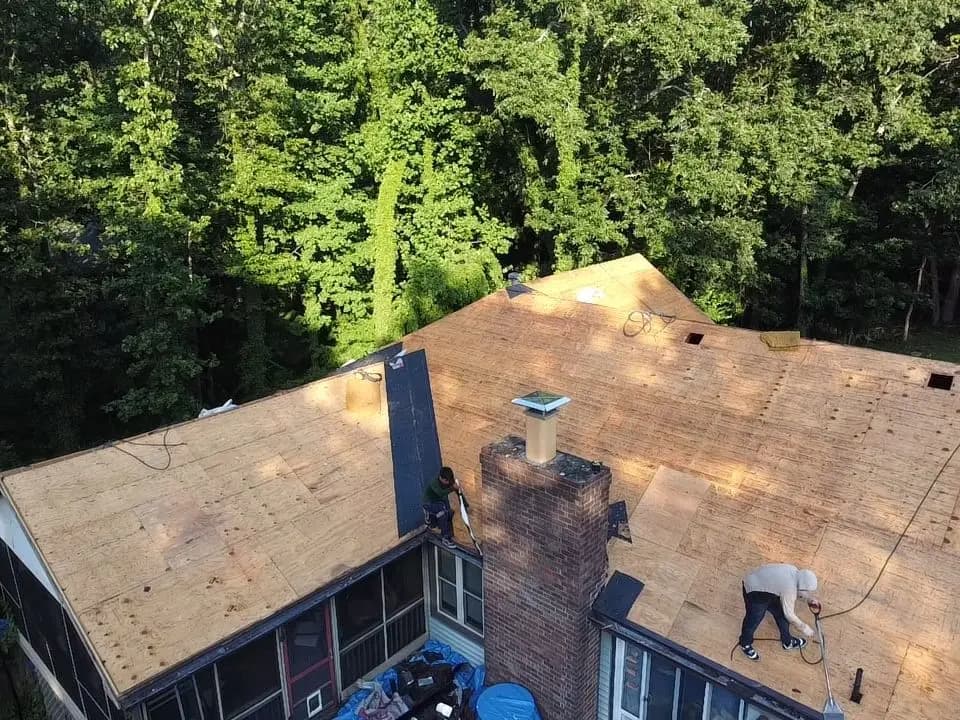
On install day we set up property protection first, which matters on sloped Roswell lots where debris wants to roll into beds and down the hill. The old roof comes off, every sheet of decking is checked and any bad wood is shown to you before it is replaced, and the new system goes on in order: drip edge, ice-and-water membrane in the valleys and at penetrations, synthetic underlayment, new flashing, shingles, and ridge ventilation sized to the attic. Most Roswell homes are finished in one to two days, and we close with a magnetic sweep of the yard and driveway.
When a Storm or a Falling Limb Starts the Conversation
Across Roswell, the storm claims we document most often start with a limb from one of the big hardwoods rather than with hail alone. When a tree or a hailstorm is the reason you are replacing, we photograph the damage slope by slope, note the canopy hazards still overhead, and describe what we find in the terms an adjuster uses. We can meet your adjuster on the roof and walk it with them, and we will tell you honestly if the damage does not look like it is worth a claim against your deductible.