The Repairs We Make Most Often in Roswell
Valleys top the list. Where two slopes meet, leaves and twigs from Roswell’s oaks and pines collect and hold water, and a valley that stays packed with wet debris eventually lets water work under the shingles on either side. In Martin’s Landing and other heavily wooded pockets, clearing a valley and rebuilding its lining is some of the most common repair work we do.
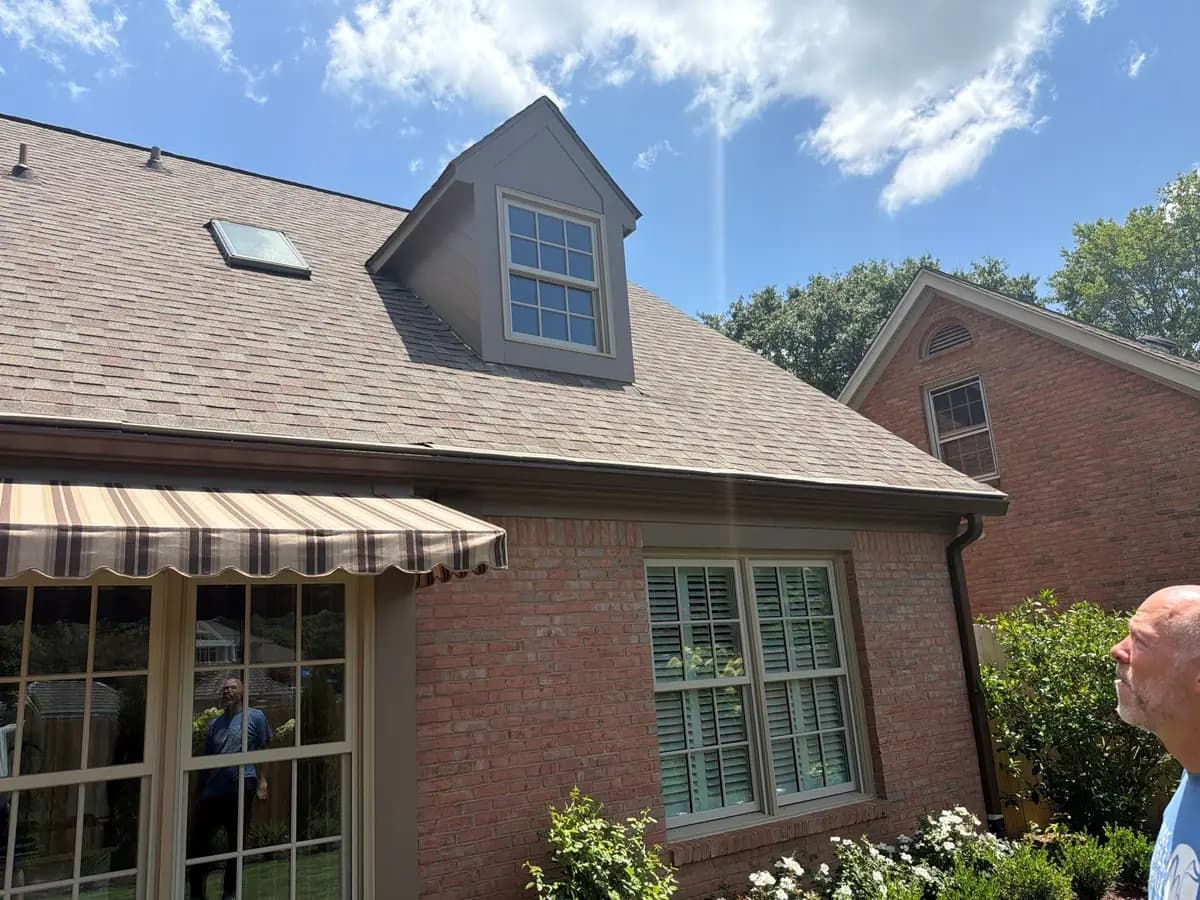
Next come limb strikes. A falling branch can crack shingles, break the seal on a row of tabs, or punch through to the decking, and in wind events the damage is often spread across a slope rather than confined to the obvious hole. We also replace a steady stream of cracked pipe boots and failed wall and chimney flashing, which is where Georgia heat does its damage first, and we reset shingles that straight-line winds have lifted or creased.
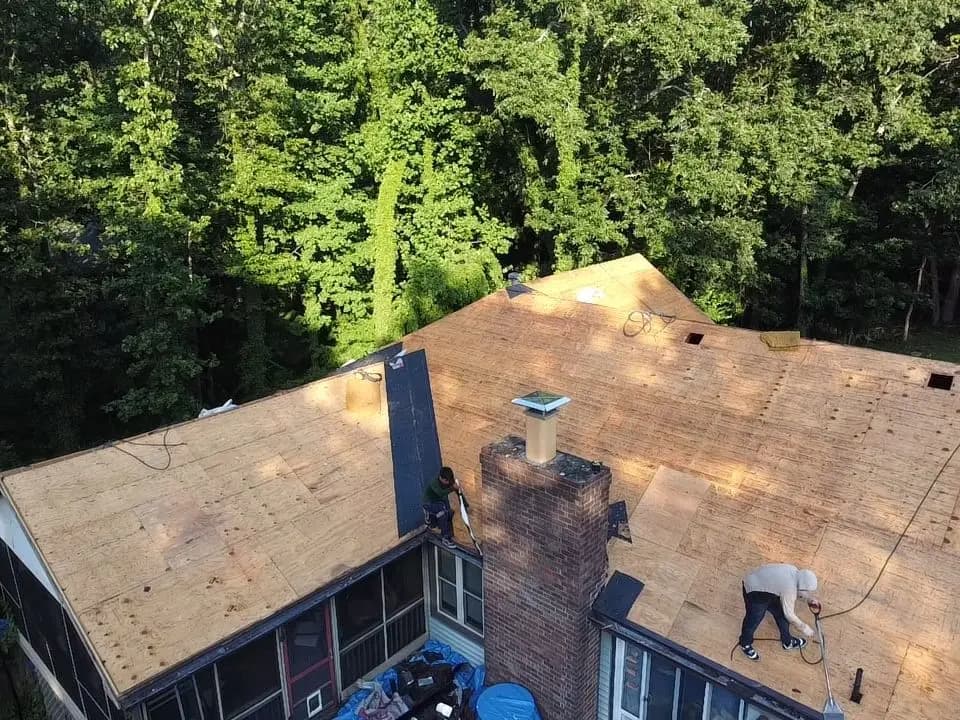
Then there is moisture. On shaded north slopes near the Chattahoochee, moss and algae keep shingles damp, and an attic with poor ventilation lets condensation soften the decking from underneath. When we find soft plywood or OSB under a leak, we replace it before we reshingle, and we show you the damaged wood first.
How We Find a Leak on a Roswell Roof
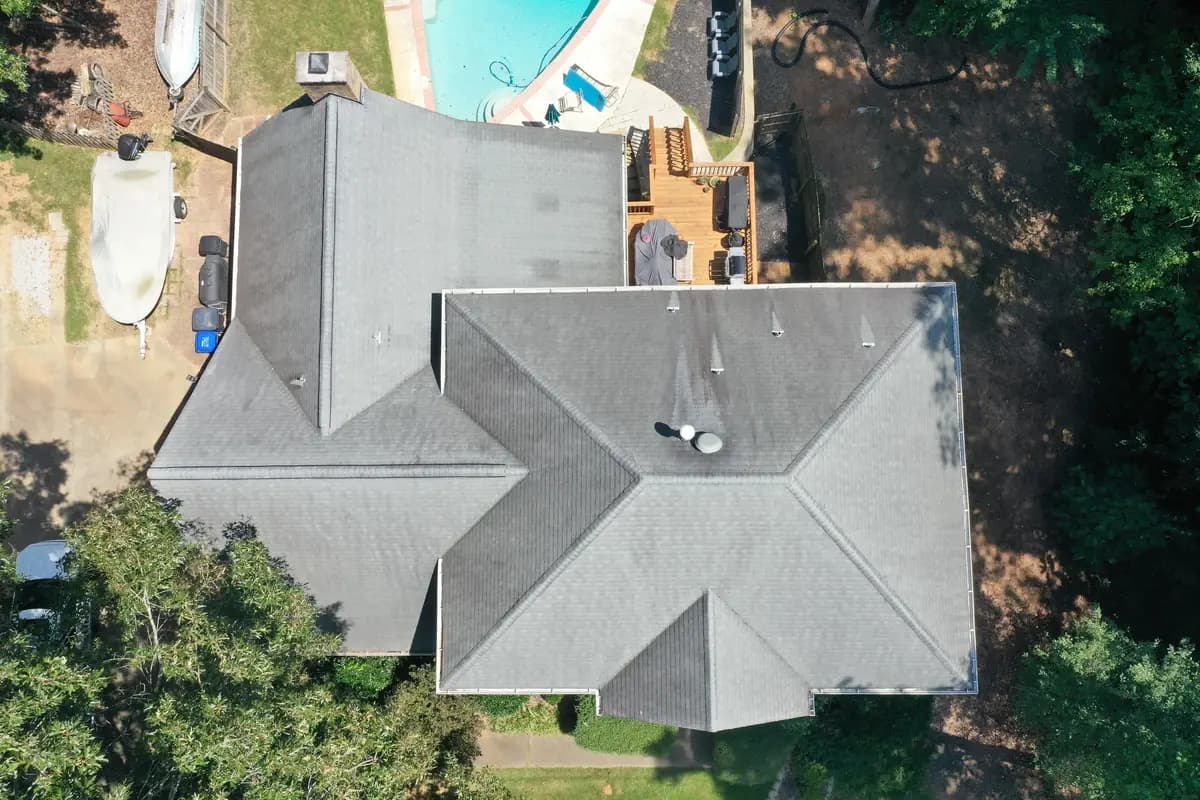
A stain on the ceiling is rarely under the spot where water gets in. On the multi-level roofs common in Roswell, water can enter at an upper wall flashing, run along a rafter or a decking seam, and appear in a room one level down. We start with the interior evidence, map it to the roof plane above, and then check every penetration, valley, and flashing detail that drains toward it.
When looking is not enough, we water-test one section at a time while a second person watches from the attic, so we fix the actual entry point instead of sealing the first suspicious spot. After a storm, we inspect for creased tabs, lifted ridge caps, and hail bruising that cannot be seen from the ground, and we photograph everything we find so you can see it for yourself.
Repair or Replace on an Older Roswell Home
Roswell’s housing covers a wide span of ages, from genuinely historic homes near Canton Street to the ’70s and ’80s houses at Martin’s Landing and the ’90s subdivisions off Holcomb Bridge Road. That range shapes the answer. A roof with plenty of service left and damage confined to one slope or a few penetrations is a good candidate for repair, and we will not talk you out of a sound roof.
The math changes when the shingles are brittle, granules are washing off every slope, and each repair buys less time than the one before. At that point we will show you the photos and tell you that repairs are no longer the sensible spend. On historic homes, we also weigh whether matching shingles are still available, because a patch that clearly does not match can matter more in a design-review area than on a newer house.
Keeping a Repaired Roof Dry Under Roswell’s Canopy
A repair holds best when the conditions that caused it change too. On wooded Roswell lots, that usually means three things. First, have the limbs that hang over the roof cut back, which cuts down on both debris and the chance of a strike in the next windstorm. Second, keep the valleys and gutters clear, ideally in late fall after the leaves drop and again in spring, so water leaves the roof instead of pooling at its lowest points.
Third, pay attention to the attic. A shaded roof near the river already dries slowly from the outside, and a poorly ventilated attic adds moisture from the inside. During a repair visit we check the intake at the soffits and the exhaust at the ridge, and if the balance is off we will tell you what it would take to correct it. We also note moss and algae growth on the north slopes, since clearing it early keeps the shingles from staying wet between storms.
Getting to Roswell From Canton After a Storm
Our home base in Canton is about 25 minutes from Roswell, so we are not a distant crew that has to route a whole day around your address. When a storm has left an opening in the roof, we can put a temporary tarp or seal in place to stop the water, then come back for a permanent repair once the materials are matched and the weather allows.
Most repairs are done in a single visit once the cause is confirmed, and every repair carries a written workmanship warranty on the area we fixed. We are fully insured, and our photo documentation is thorough enough to support an insurance claim or a future home sale.