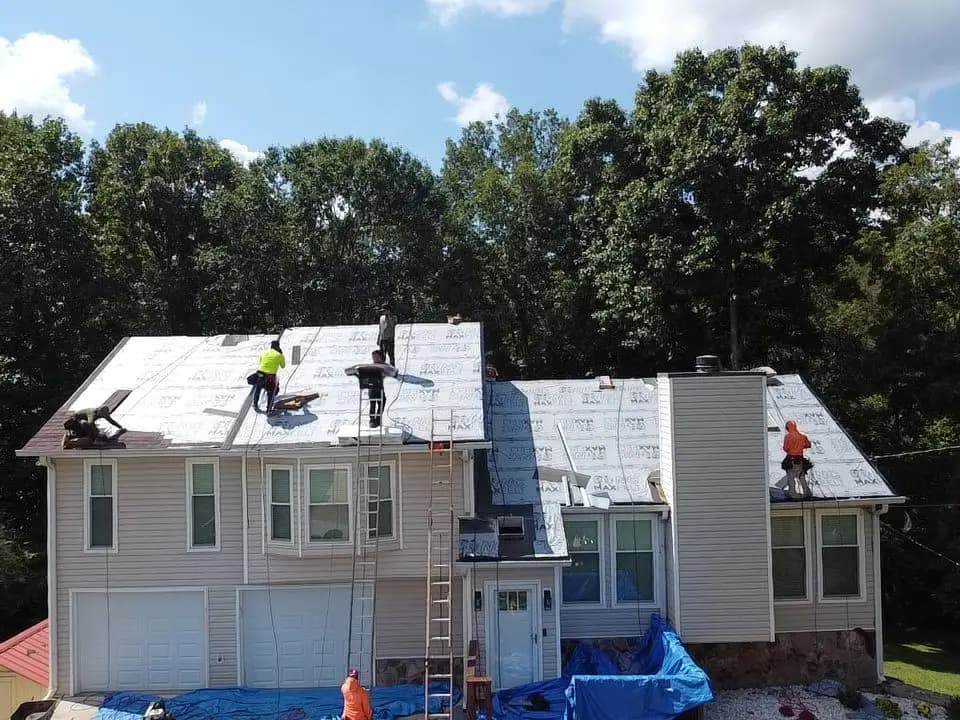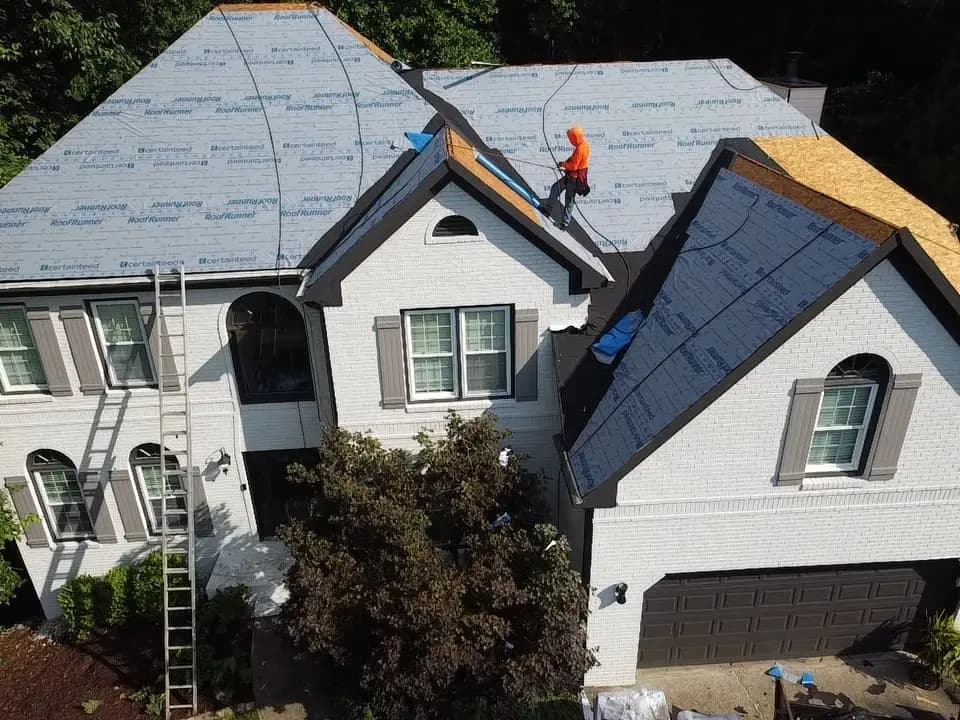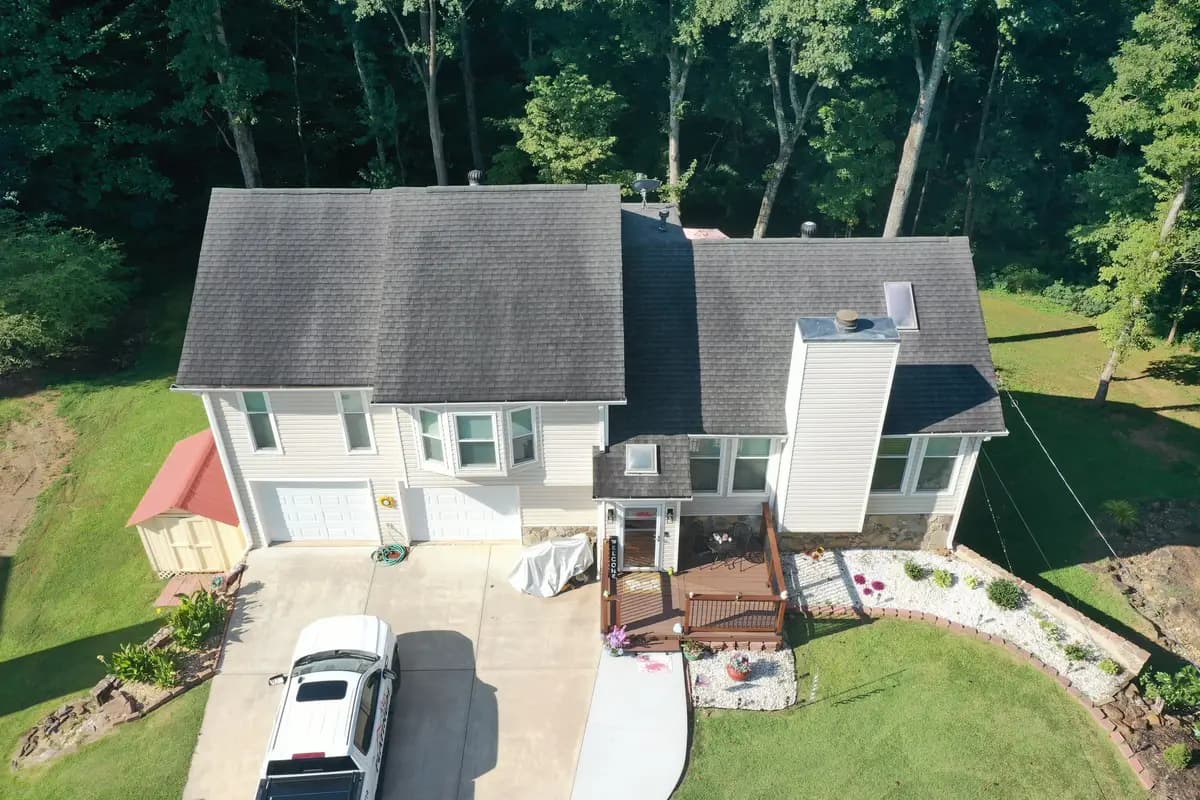
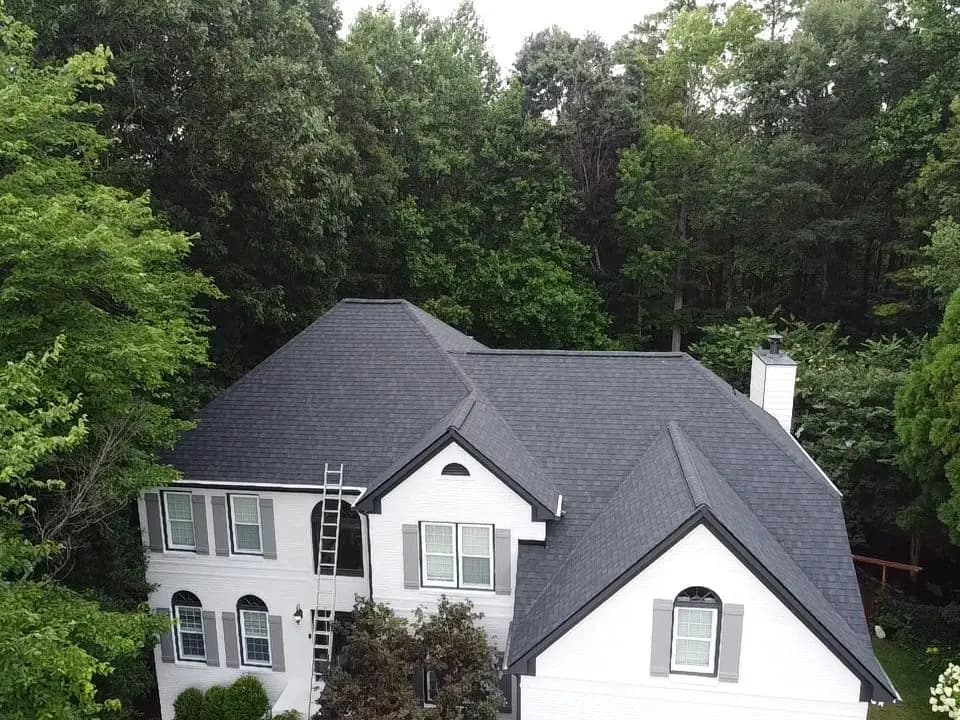
Why Woodstock Roofs Need the Repairs They Do
Woodstock’s dense hardwood cover is behind a large share of our repair calls. In Towne Lake, Eagle Watch, and the older neighborhoods off Bells Ferry, leaves and pine straw collect in valleys and gutters, hold moisture against the shingles, and eventually back water up beneath them. The first cold rain after the oaks finish dropping in late fall is when those valleys most often let go.
Overhanging limbs cause a second kind of wear. Every time the wind moves them, they scrub granules off the shingles below, leaving bare patches that crack and let water in long before the rest of the roof is worn. We also replace a steady number of split pipe boots and lifted ridge caps, especially on the taller two-story homes that take the brunt of the gusts.
Finding the Leak Before We Fix It
A stain over a Towne Lake bonus room or in a downtown renovation rarely marks the spot where water enters. It usually runs along framing or a decking seam first. We work from the inside out: into the attic where we can reach, following the water marks to the roof plane above, then checking every valley, flashing joint, and penetration in that section.
If nothing obvious turns up, we water test, soaking one area at a time while a technician watches from below until the drip appears. It is slower than sealing the first likely spot, and it is the reason our repairs do not have to be redone after the next storm. You get photographs of what failed and how we fixed it.
Soft decking deserves special attention on Woodstock homes where a valley has been overflowing for a while. When we find plywood or OSB that has turned spongy around the leak, we replace it before the new shingles go down, and we show it to you first. Covering rotten wood with fresh shingles only hides the problem until the next heavy rain.
Wind, Hail, and Falling Limbs in Cherokee County
The line of severe storms that moves up I-575 each spring brings hail and straight-line wind through Woodstock. Wind leaves creased or missing shingles and lifted ridge caps. Hail bruises the mat under the granules, which weakens the shingle even when nothing looks missing from the street. Limbs brought down in those storms can puncture the roof outright.
We mark impacts on every slope, tell real storm damage apart from blistering or old wear, and let you know whether a targeted repair will do or whether the damage is broad enough to take to your insurer. When a limb has broken through, the opening gets tarped before anything else.
Is a Repair Still Worth It on a 20-Year-Old Woodstock Roof?
Many Woodstock roofs date from the building boom of the 1990s and early 2000s, so this question comes up on nearly every call. A repair is the smart choice when the problem is confined to one area, the decking underneath is sound, and the surrounding shingles still hold their granules. We match your existing shingle line and color as closely as current products allow.
If granule loss is widespread, several slopes are affected, or the roof has already been patched more than once, a repair buys less time with each visit. At that point we will tell you plainly that replacement is the better value, and if the roof still has life in it, we will tell you that instead.
Some owners in Towne Lake and Bradshaw Farm choose to repair now and budget for a replacement in a later season. That is a sensible plan when the roof supports it, and our photo record from the repair visit gives you a clear baseline for the next inspection.
Fifteen Minutes From Our Canton Base
Woodstock is about 15 minutes from our home base in Canton, which keeps response quick after a storm. Most repairs are finished in a single visit once the cause is confirmed, and each comes with a written workmanship warranty on the repaired area. We also repair flat and low-slope roofs on the commercial buildings near Main Street and The Outlet Shoppes at Atlanta. Call (770) 419-5714 for a free leak inspection.
When you call, it helps to tell us where the stain is, when it appears, and whether it follows wind from a particular direction. Those details point us to the right slope before we set up a ladder, which makes the visit shorter and the diagnosis sharper.