Roof Repair & Replacement
Roof Repair vs. Roof Replacement: How to Know Which One You Need
By David Blackwell · August 12, 2026 · 15 min read
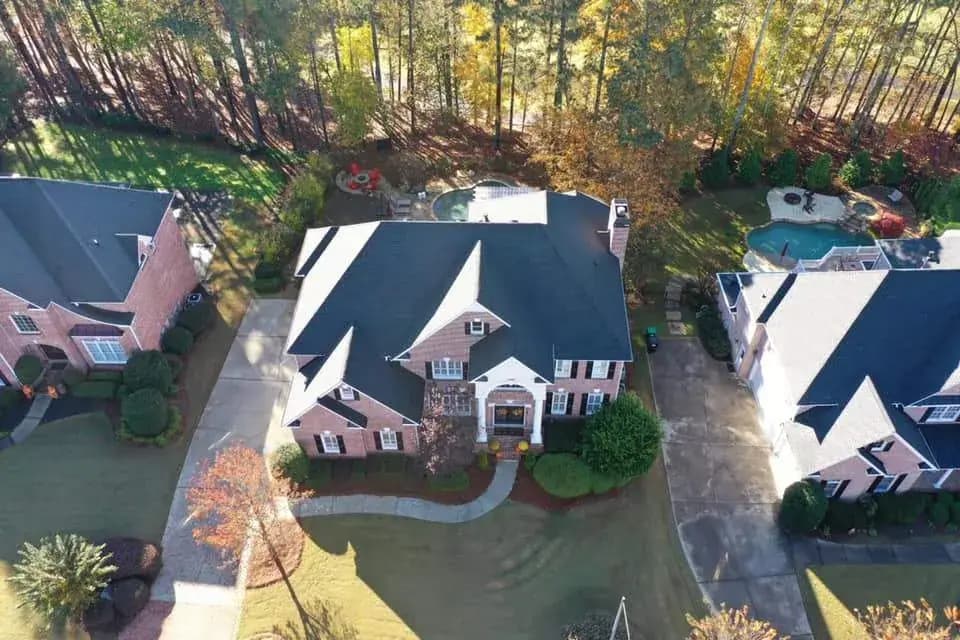
You have a leak, a few missing shingles, or a spot that looked wrong after the last storm, and now you are staring at the same question every homeowner lands on: do I fix this one area, or is the whole roof done? I hear it every week on job sites across Canton and North Atlanta. I am David Blackwell, Production Manager at Platinum Roofing, and my crews handle both repairs and full replacements, so I have no reason to push you toward one when the other is the honest answer.
The good news is that this is usually not a close call. Once you look at the right factors, the answer is clear more often than not. Here is what actually decides it: the age of the roof, how far the damage spreads, how many times the same area has been patched, what the decking looks like underneath, and what the rest of the shingle field tells you about the years ahead. Let me walk through each one, because understanding these five things will keep you from spending money in the wrong place.
The Five Factors That Decide It
Every repair-or-replace call comes down to the same five questions. I run through them on every job we look at, and by the time we finish, the homeowner usually sees the answer too.
If most of those factors land green, a targeted repair will handle the problem and the roof has plenty of life ahead. If most land red, the repair is not going to buy you much time, and the money goes further toward a new roof. The in-between is where a professional eye matters, and that is exactly what a free inspection sorts out.
When a Repair Is the Right Call
A repair makes sense when the damage is isolated and the rest of the roof is healthy. Here is what that usually looks like on a job:
The roof is under 15 years old. A newer architectural shingle roof has a solid decade or more of service ahead of it. Replacing the whole thing because of one problem area would be like junking a car over a flat tire.
The damage is in one spot. A leak around a pipe boot, a valley that lost its seal, wind damage on one slope, or a handful of shingles that blew off in a storm. If you can point at the problem and there is only one of it, a repair usually covers it.
The shingles around the repair still look good. When the surrounding shingles are flat, their granules are intact, and the field has a uniform color, that tells you the rest of the roof is aging normally and the repair area is an outlier, not a symptom.
It is the first time this area has needed work. A spot that has never been patched before is a straightforward fix. The second time the same area needs attention is a different conversation.
A typical repair in North Georgia, for issues like a failed pipe boot, a small section of wind-damaged shingles, or a leaking valley, runs between $300 and $1,500 depending on the scope. For a full breakdown of repair costs, our pricing guide covers the numbers by project size.
When Replacement Is the Smarter Move
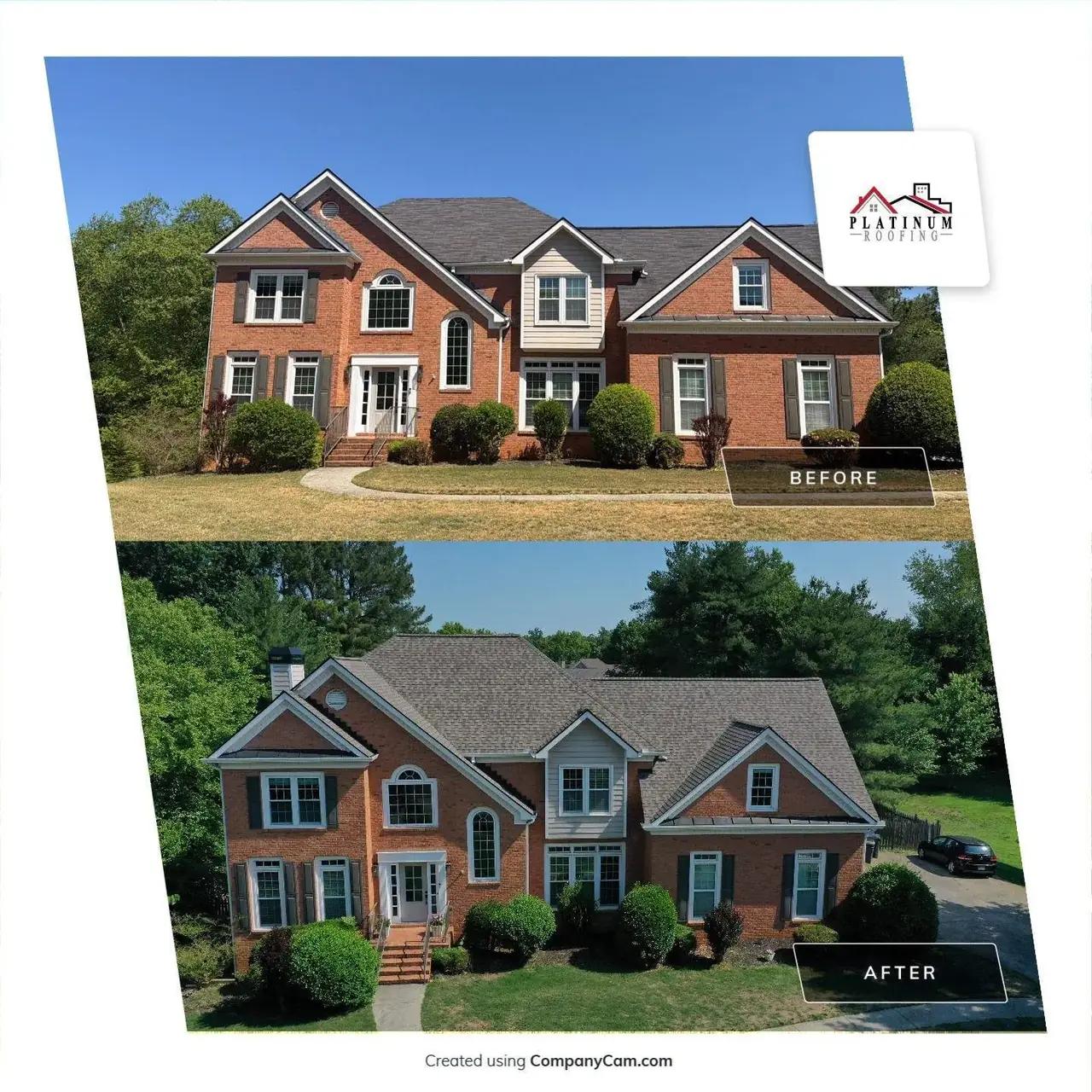
A replacement makes sense when the problem is not really the one spot you called about. It is the whole roof telling you it is done. Here is what I see on the job sites where we end up recommending a full tear-off:
The roof is past 20 years. In our North Georgia climate, a standard architectural shingle roof delivers about 22 to 25 years of real-world life. Once you are past 20, a repair is buying you time in months, not years. Repairing a roof with only a couple of years left is the most expensive way to get to the same replacement.
Damage shows up in multiple places. If you have a leak in the valley, wind damage on the front slope, and worn shingles on the back where the afternoon sun hits, the problem is age, not bad luck. Multiple trouble spots at once almost always mean the shingles are at the end of their service life.
You have already repaired this roof two or more times. Every patch is a sign that the roof's margin is gone. The third repair call in five years is not a sign that you keep getting unlucky. It is a sign that the roof has been telling you something and the answer has been the same each time.
The decking is soft or water-stained. When we pull back shingles and the plywood underneath gives under a boot or shows dark water marks, the damage has moved past the surface. Soft decking means the leak has been there longer than you thought, and new shingles on top of compromised wood do not solve anything. You need to replace the bad sections of decking during a tear-off, and that only happens during a full replacement.
The shingles are curling, cracking, or bare. Pick up a shingle tab: if it cracks instead of flexing, or if the granule layer has worn down to the fiberglass mat, the shingles are done. This is not a defect. It is normal wear that every roof reaches eventually, and it is the clearest single signal that a repair will not hold.
The Patch Trap: How Small Repairs Add Up
This is the pattern I want every homeowner to recognize before they fall into it. A repair is the right answer when it is a one-time fix to a sound roof. It becomes the wrong answer when the same roof needs repairs year after year and each one looks "reasonable" on its own.
In that example, the homeowner spent $6,800 over five years on three separate repairs, and the roof still failed. If they had replaced it at the first call for about $12,000, they would have saved five years of worry, three separate disruptions, and would be sitting on a roof with 20 more years of life instead of zero. The replacement was always the cheaper option once you add up the real numbers.
This does not mean every repair is a trap. It means that once your roof is past 18 to 20 years, the honest question is whether a repair is buying you enough time to justify the cost, or whether that money is better put toward the permanent solution.
What We Find Under the Shingles
The part of this decision you cannot make from the ground is what is happening underneath. Shingles are the visible layer, but the system below them, the underlayment, the flashing, and the plywood decking, is what determines whether a repair holds or fails six months later.
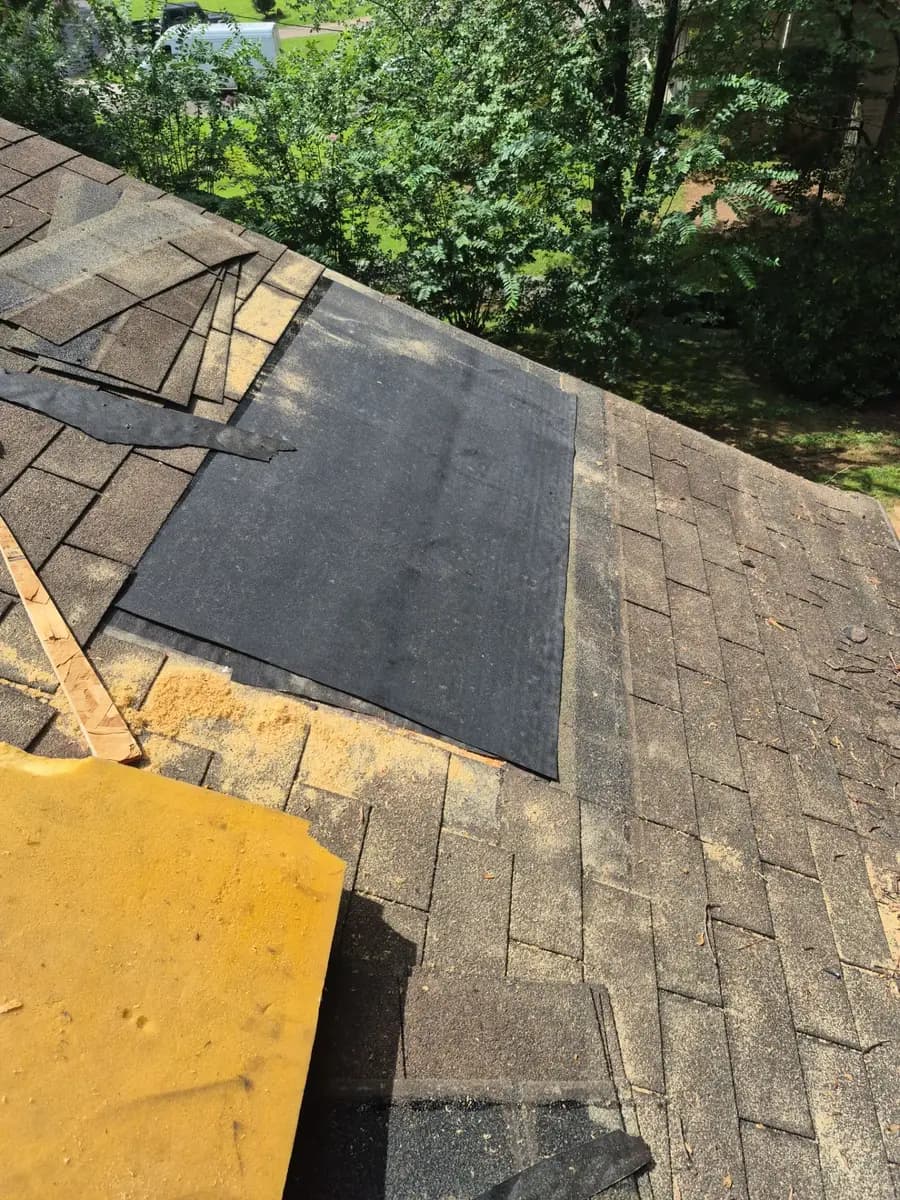
On a repair, we pull back the shingles around the problem and look at the wood. If the decking is firm, the underlayment is intact, and the leak path is obvious and contained, the repair will hold. If the plywood is spongy, the water has been running longer than anyone realized, or the underlayment has deteriorated across a wide area, putting new shingles on top of that does not actually fix the problem.
This is why a free inspection is the starting point, not a sales pitch. Getting on the roof and checking the attic from below tells us things about the decking, the ventilation, and the underside of the sheathing that no ground-level look ever will. Our inspectors do not just look at the shingles. They check the attic ventilation and the condition of the wood from both sides, because a roof that is cooking in a poorly ventilated attic ages years faster than one that breathes properly.
Georgia Weather Tips the Scale
A few things about roofing in North Georgia make this repair-or-replace decision land differently than it might up north.
Heat is the biggest factor most people miss. Our summers bake shingles from above while a hot attic pushes heat from below, and that double load shortens the real-world life of every roofing material. The 25-year shingle is often a 22-year shingle in practice here, which means the window where a repair makes sense is shorter than the warranty suggests. Our guide to the best roofing materials for this climate explains which ones hold up best.
Summer storms make the timing matter. A borderline roof that limps through the spring might not survive a July hailstorm or an August wind event. If you are on the fence and storm season is approaching, replacing before the storms come is insurance that actually pays off. When a storm does come through, our guide to what to do after the damage walks you through the steps, and the response is simpler and faster when the roof you are starting from is sound.
Hail history matters here. North Georgia gets enough hail that a roof with prior hail damage and current wear is a different animal than one with just age. If your roof has taken hail before, the shingles may have bruises that are not visible from the ground but are quietly letting water in. A repair may not address the hidden impact sites around the visible damage. That is another reason the on-roof inspection matters: we can see the hail marks your adjuster noted two years ago and tell you how they are aging.
How to Find Out Where Your Roof Stands
The repair-or-replace question has a real answer, and it usually takes less than an hour to find it. Here are two ways to start.
If you want a number before anyone comes out, try our instant roof quote. You enter your address, we measure your actual roof from current aerial imagery, and you get a report with the square footage, pitch, facet count, and a price range in three material tiers emailed to you in about a minute. It costs nothing and nobody visits your home.
When you are ready for the definitive answer, schedule a free inspection. We get on the roof, check the attic, and walk you through exactly what we find. You will know whether a repair will solve the problem or whether the roof has reached the point where replacement is the honest recommendation. There is no pressure and no obligation.
We serve Canton, Woodstock, Holly Springs, Ball Ground, Jasper, Roswell, Alpharetta, Milton, Johns Creek, Marietta, Kennesaw, Acworth, and the rest of the eleven North Georgia counties in our service area. Call Platinum Roofing at (770) 419-5714, book your free inspection online, or get an instant quote. We have been doing this since 2000, and we will tell you straight whether your roof needs a patch or a new start.
Frequently Asked Questions
How do I know if my roof needs to be repaired or replaced?
Look at five things: the age of the roof, how widespread the damage is, how many times the same areas have been fixed before, the condition of the plywood decking underneath, and whether the shingles across the rest of the roof are still flat and granulated or are curling and bare. If the damage is in one spot, the roof is under 15 years old, and the rest of the field looks healthy, a repair usually handles it. If you are seeing problems in multiple areas, the roof is past 20, or the decking is soft, replacement is the path that actually solves the problem. A free inspection gives you the definitive answer.
How many times can you repair a roof before you should replace it?
There is no strict limit, but two or more repairs in a five-year stretch is a clear signal. Each repair says the roof's margin is thinner than it was, and the third call usually means the shingles have reached the end of their service life. At that point the repair money is better invested in a replacement that resets the clock for 25 years.
What does a typical roof repair cost in North Georgia?
Most residential repairs in our area run between $300 and $1,500, depending on scope. A single pipe boot or a few missing shingles is on the low end. A failed valley, flashing work, or a section of wind-damaged shingles on a steep pitch is on the higher end. Our roof cost guide breaks down both repair and replacement pricing by project size.
Is it cheaper to repair a roof or replace it?
A single repair is always cheaper than a replacement on its own. The question is whether one repair is all the roof needs. If the roof is aging and repairs start stacking up, the total cost of repeated patches can approach half the cost of a replacement while leaving you with the same failing roof. A repair at $1,200 is a good investment on a 10-year-old roof. Three repairs at $1,200 each on a 22-year-old roof is $3,600 spent on something you are going to replace anyway.
Can I just patch a roof leak and wait?
You can, and sometimes that is the right move. If the roof is young, the leak source is clear and contained, and the decking underneath is solid, a targeted repair buys you years of reliable service. The risk is waiting on a roof that is already near the end of its life, because a patch at that stage may only hold through the next storm season, and the leak can spread in ways that damage the interior, the insulation, and the wood framing before you get to the replacement.
How long does a roof repair last?
On a sound, younger roof, a quality repair lasts as long as the surrounding shingles, which could easily be 10 to 15 more years. On an aging roof where the shingles around the repair are already near the end of their life, the repair is only as durable as its weakest neighbor. That is the key distinction: a repair to a healthy roof is a long-term fix, while a repair to a dying roof is a short-term one.

About the Author
David Blackwell
Production Manager at Platinum Roofing, running the crews and quality checks on roof and seamless gutter installations across Canton, Woodstock, and the greater North Atlanta metro. Meet the Platinum Roofing team →