Storm Damage
Hail and Storm Damage to Your Roof: How to Spot It Early in North Georgia
By Robert Shelby · August 30, 2026 · 14 min read
North Georgia gets its share of hard weather. A spring line of storms rolls through Cherokee County, a summer thunderstorm parks over Canton for twenty minutes, and the next morning everything looks fine from the driveway. That is the trap. Real storm damage almost never looks like a hole in your roof. It looks like a handful of granules washed down to the base of a downspout, a couple of shingle tabs lifted at the corner, and a dent in the gutter you would never notice unless you went looking.
I am a fourth-generation roofer, and I have walked thousands of these roofs after a storm. The homeowners who catch damage early get it handled as a clean repair or a covered replacement. The ones who wait find out the hard way, when a brown ring shows up on the ceiling in the middle of winter and the storm that caused it is long past the window to file a claim. This guide shows you exactly what to look for so you can tell the difference.
What Hail and Wind Actually Do to a Roof
Two different forces show up in the same North Georgia storm, and they leave different marks.
Hail hits the shingle straight down and knocks the protective granules loose. Those granules are the sunscreen for the asphalt underneath. Once they are gone in a spot, the sun starts cooking the mat, and that spot ages years faster than the shingle around it. A hard hit can also fracture the mat itself, which is the bruise a roofer feels as a soft, give-way spot even when the surface still looks intact. Quarter-size hail, about one inch, is generally where this begins on an asphalt roof. That is not a number I made up to sell a roof, it is roughly the same threshold the National Weather Service uses to call hail severe.
Wind works sideways. It gets under the edge of a shingle, breaks the seal that holds the tab down, and folds it back. Sometimes the tab creases and stays lifted. Sometimes it tears off entirely and lands in the yard or the neighbor's. Either way, the seal is broken, and a shingle that no longer seals is a shingle that lets wind-driven rain get behind it. A roof can lose a dozen shingles in one gust and still look almost normal from the street.
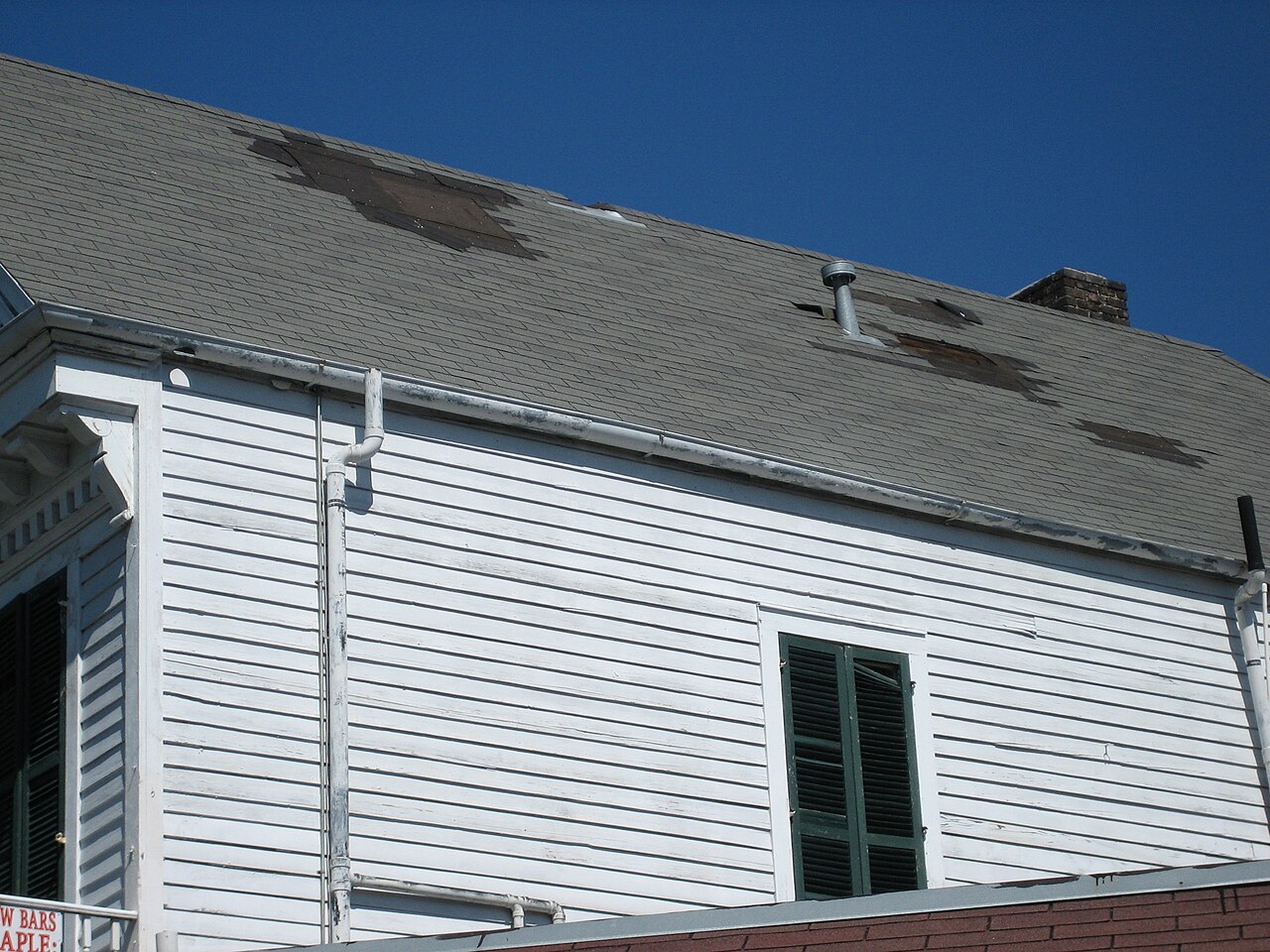
Photo: Infrogmation, via Wikimedia Commons (CC BY-SA 2.5). Shown to illustrate wind damage that stripped shingles down to the deck.
The pieces most people forget are the accessories. Storms bend flashing around chimneys and walls, crack the rubber boots that seal your plumbing vents, dent metal vent caps, and hammer your gutters and downspouts. Those spots leak just as surely as a missing shingle, and they are the ones a quick glance from the ground will miss.
The Signs You Can Spot From the Ground
You do not need to climb up to get your first read. Walk the perimeter of your house after a storm and look for these:
- Granules at the downspouts. Check where your downspouts drain onto the driveway or a splash block. A pile of what looks like coarse black sand is shingle granules that the storm knocked loose and the rain carried down. A little is normal on an older roof. A fresh heap after one storm is a flag.
- Dented gutters, downspouts, and soft metal. Hail leaves dimples in soft metal. Your gutters, your gutter guards, your metal window wraps, the fins on your air conditioner, even a metal mailbox all take the same hits your shingles did. If those are dented, your roof got hit too.
- Shingle debris in the yard. Whole tabs or corners of shingles on the ground came from your roof or a neighbor's. Either way it means shingles were moving.
- Dark or patchy spots on the roof. From the ground, an area where the granules were stripped often reads as a slightly darker, mottled patch against the rest of the slope. Bruised or worn shingles look different up close, but the patchiness can show even from below.
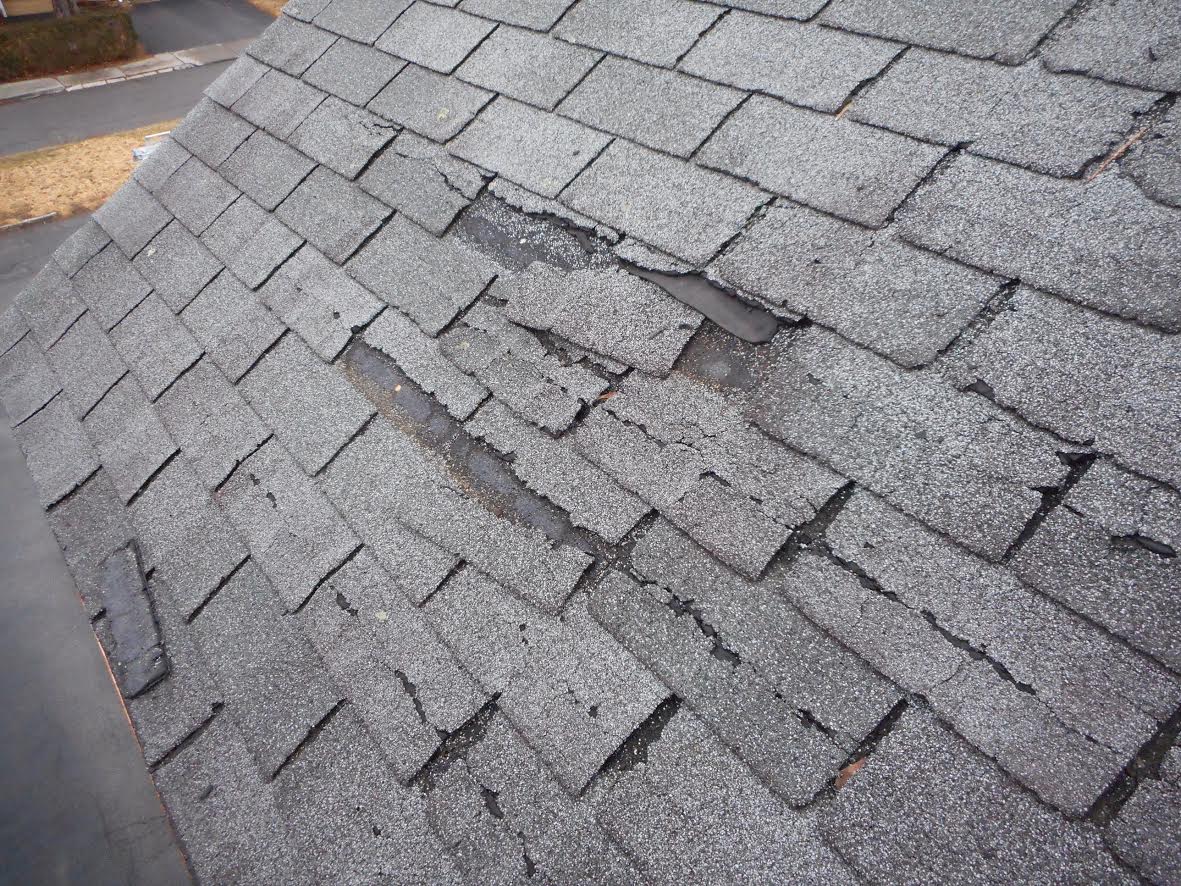
Photo: Sandul1234, via Wikimedia Commons (CC BY-SA 4.0). Shown to illustrate cracked shingles with heavy granule loss.
The Signs That Need a Roofer on the Roof
Some damage only shows itself once you are on the shingles, and this is the part I would never ask a homeowner to do alone. A wet or storm-hit roof is slick, and North Georgia has plenty of steep ones. This is what a proper inspection turns up that the ground check cannot:
- Bruising you feel more than see. A roofer runs a hand across the slope and finds the soft, fractured spots where hail cracked the mat under a surface that still looks whole.
- Creased and lifted tabs. A shingle that was folded by wind and sprang back often keeps a faint crease line. That crease is a broken seal and a future leak, even though the shingle is still in place.
- Popped or backed-out nails. Wind uplift and temperature swings back nails out over time, and a storm accelerates it. A raised nail tents the shingle above it and eventually works a hole.
- Damaged flashing and boots. The metal in the valleys and around the chimney, and the rubber boots around the vent pipes, are where a surprising share of real leaks start.
Cosmetic Damage vs. Damage That Matters for a Claim
Not every mark on a roof is a leak waiting to happen, and a good roofer will tell you so. A scuff on a vent cap is cosmetic. A bruise that fractured the shingle mat is functional damage, because it has shortened the life of that shingle and opened a path for water. Insurance adjusters draw that same line, and it is the line that decides whether a claim gets approved.
I will not turn this into an insurance lesson, because we already wrote the full one. If you want how coverage actually works in Georgia, including the difference between actual cash value and replacement cost, the adjuster meeting, and how long you have to file, read our claims guide from the office. If a storm just hit and you need the immediate steps, start with what to do after a storm damages your roof. What matters here is that you get an honest, documented read on your roof so you know which side of that line you are on.
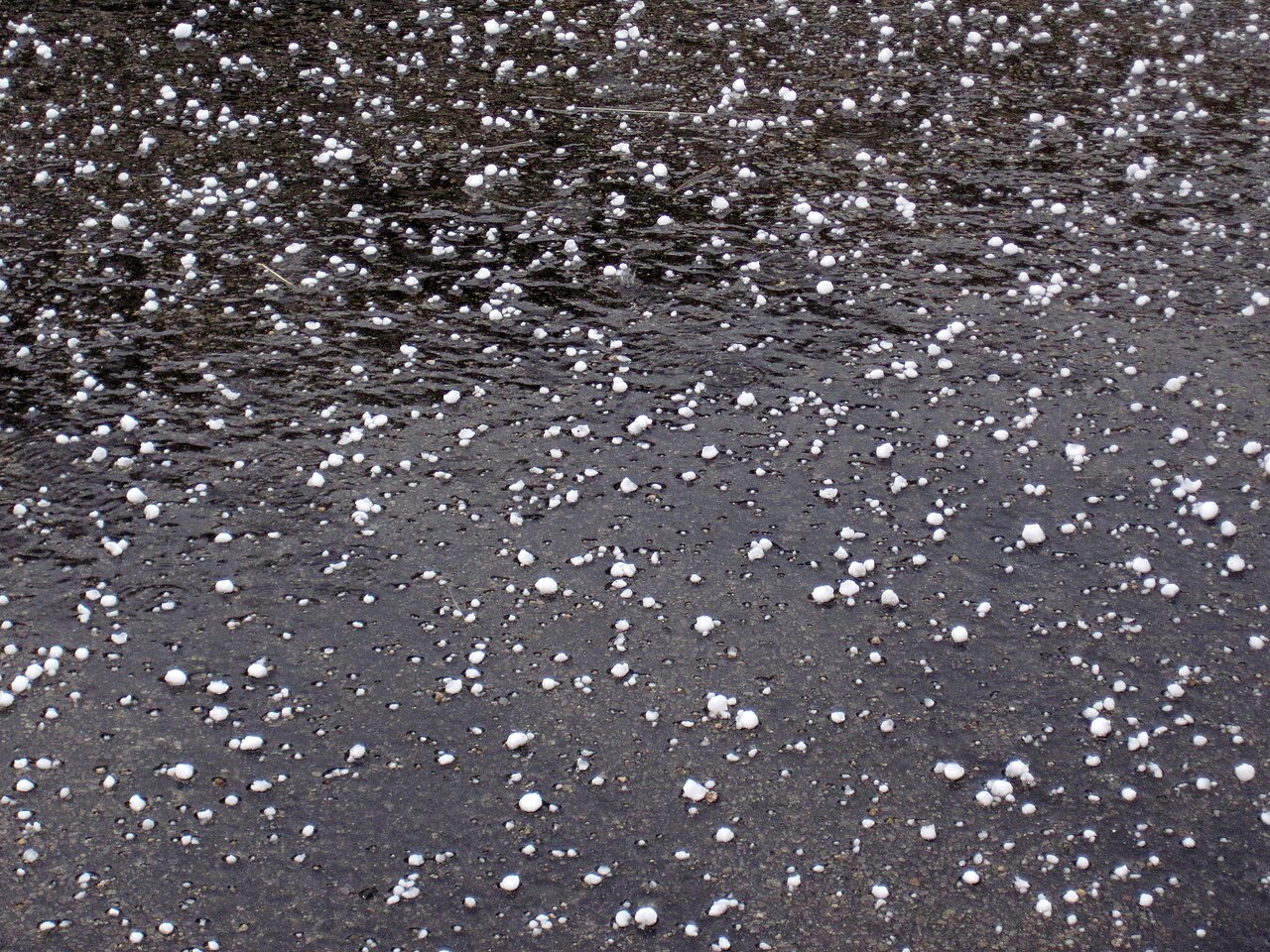
Photo: James St. John, via Wikimedia Commons (CC BY 2.0). Shown to illustrate hail on the ground; quarter-size stones and up are worth an inspection.
Why Moving Fast Matters
A broken shingle seal or a cracked boot does not flood your living room overnight. It seeps. Water finds the decking, the decking stays damp, and over a season you get rot, and behind the rot you get mold in the attic. A repair that would have been straightforward turns into replacing sheathing and treating framing. Catching it in the weeks after the storm keeps a small problem small.
There is a second clock too. Insurance policies give you a limited window to file for storm damage, and once it closes, that storm is no longer on the table no matter how clearly it caused the problem. The exact deadline is in our claims guide, and it is shorter than most people assume.
One caution while you are moving fast: move fast, but not with the first stranger who knocks. After every big North Georgia storm, out-of-town crews go door to door pushing homeowners to sign on the spot. A real inspection and a real estimate do not require a signature at your kitchen table that afternoon. If you want to know the exact pitches to watch for, we broke them down in seven roofing scams and how to spot one.
Can You Get Ahead of the Next Storm?
You cannot stop hail, but you can change what it does to your roof. Impact-resistant shingles, rated Class 4 in the standard industry test, are built with a tougher mat that resists the bruising and cracking that a standard shingle takes. In hail country they are the honest answer to "what is the best roofing for hail," and many insurers in Georgia offer a premium discount for installing them, which softens the small upcharge over time. If your roof is already near the end of its life and you are in a part of Cherokee, Cobb, or Forsyth County that keeps catching storms, they are worth asking about when you replace.
Get a Free Storm-Damage Inspection
If a storm has come through and anything in this guide sounds familiar, the next step is simple and it costs you nothing. We come out, walk the whole roof, and give you a straight answer with photos: what the storm did, whether it is a repair or a replacement, and whether it rises to the level of an insurance claim. If it does, you have the documentation in hand to file it. If it does not, we tell you that too, and you go on with your day knowing your roof is sound.
Want a ballpark before anyone visits? Start with our instant roof quote: enter your address, we measure your actual roof from current aerial imagery, and you get the square footage and a price range emailed to you in about a minute. When you are ready for eyes on the roof, book a free inspection online or call Platinum Roofing at (770) 419-5714.
We serve Canton, Woodstock, Holly Springs, Ball Ground, Jasper, Roswell, Alpharetta, Milton, Johns Creek, Marietta, Kennesaw, Acworth, and the rest of the eleven North Georgia counties in our service area. We have been putting on roofs here since 2000, and we will give you the truth about yours.
Frequently Asked Questions
How can I tell if my roof has hail damage?
Start from the ground. Look for piles of shingle granules at the base of your downspouts, dents in your gutters and other soft metal like your mailbox or air conditioner fins, and loose shingle pieces in the yard. Dents in soft metal are a reliable sign, because if the hail was hard enough to dimple your gutters, it hit your shingles the same way. The bruising itself often hides under a surface that still looks intact, which is why a hands-on inspection from a roofer is the only way to know for sure how far it goes.
What size hail damages a roof?
On an asphalt shingle roof, damage generally begins around quarter-size hail, which is about one inch across. That is roughly the same size the National Weather Service uses to classify hail as severe. Smaller pea-to-marble hail is usually cosmetic, while half-dollar and golf-ball hail cause progressively more serious, widespread damage. Any time you know quarter-size or larger hail fell on your area, it is worth getting the roof looked at.
Does homeowners insurance cover hail and storm damage in Georgia?
In most cases yes, when the damage was sudden and caused by the storm rather than by age or lack of maintenance. The details, including replacement cost versus actual cash value, the adjuster meeting, and the deadline to file, are covered in our full Georgia claims guide. The key is to get a documented inspection quickly so you have proof of what the storm did while the claim window is still open.
How soon should I get my roof inspected after a storm?
Within a few weeks, and sooner is better. A broken shingle seal or a cracked vent boot leaks slowly, so damp decking and attic mold build up quietly over a season before you ever see a stain on the ceiling. Filing deadlines with your insurer also run out faster than most homeowners expect. Catching it early keeps a repair from turning into a rot-and-framing job and keeps your claim options open.
Are impact-resistant shingles worth it in North Georgia?
For homes in the parts of Cherokee, Cobb, and Forsyth County that keep catching storms, they often are. Class 4 impact-resistant shingles use a tougher mat that resists the bruising and cracking standard shingles take from hail, and many Georgia insurers offer a premium discount for them that offsets the modest upcharge over time. They make the most sense when you are already due for a replacement.
Do you offer free storm-damage inspections near me?
Yes. We provide free, no-obligation storm-damage inspections across our North Georgia service area, including Canton, Woodstock, Holly Springs, Roswell, Alpharetta, Milton, Marietta, Kennesaw, and the surrounding counties. We walk the full roof, document what we find with photos, and give you a straight answer on whether you are looking at a repair, a replacement, or an insurance claim. Call (770) 419-5714 or book online.

About the Author
Robert Shelby
Fourth-generation roofer who founded Platinum Roofing in 2000. Meet the Platinum Roofing team →