The Repairs Johns Creek Roofs Need Most
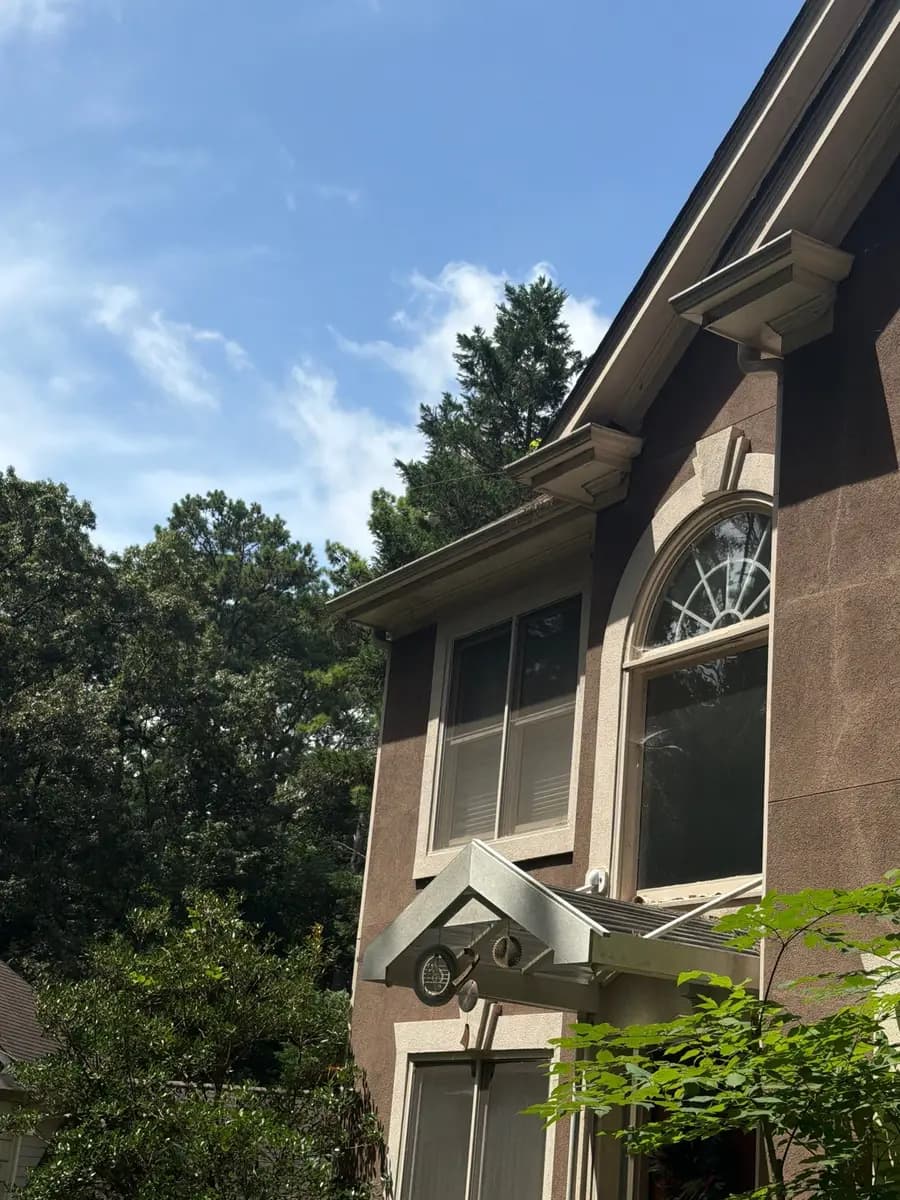
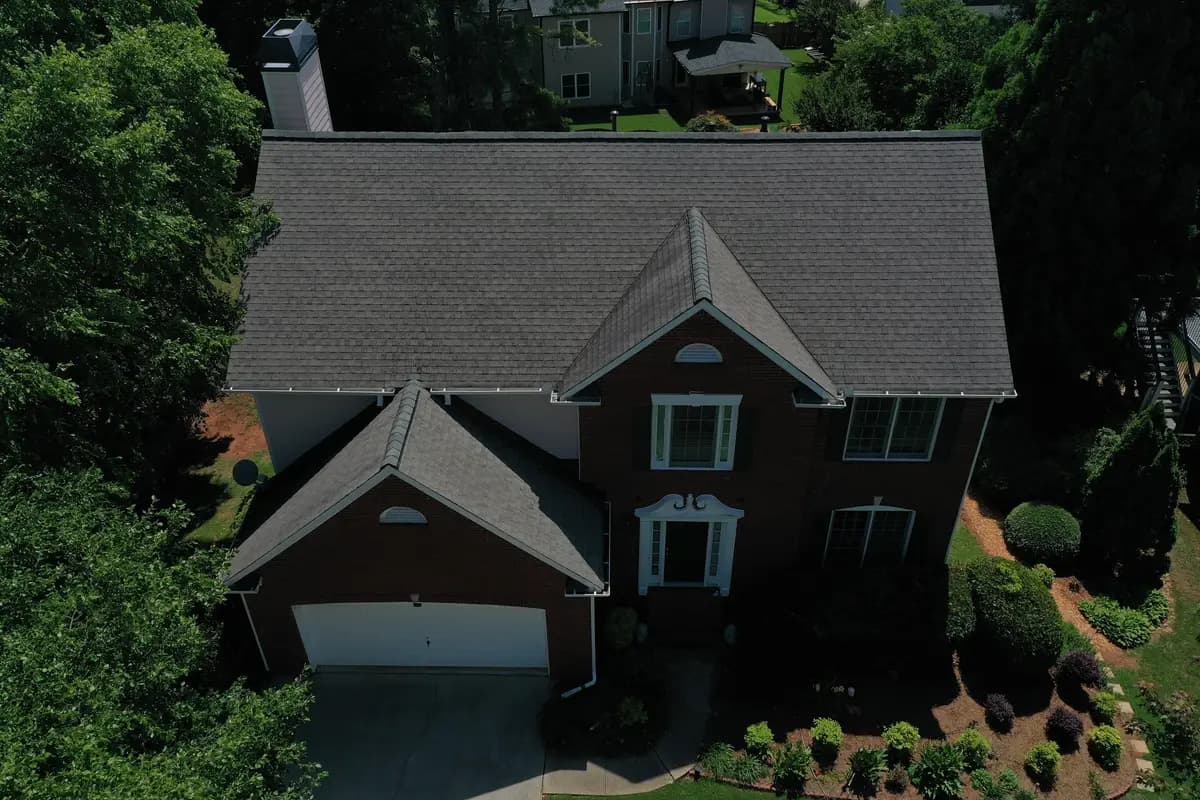
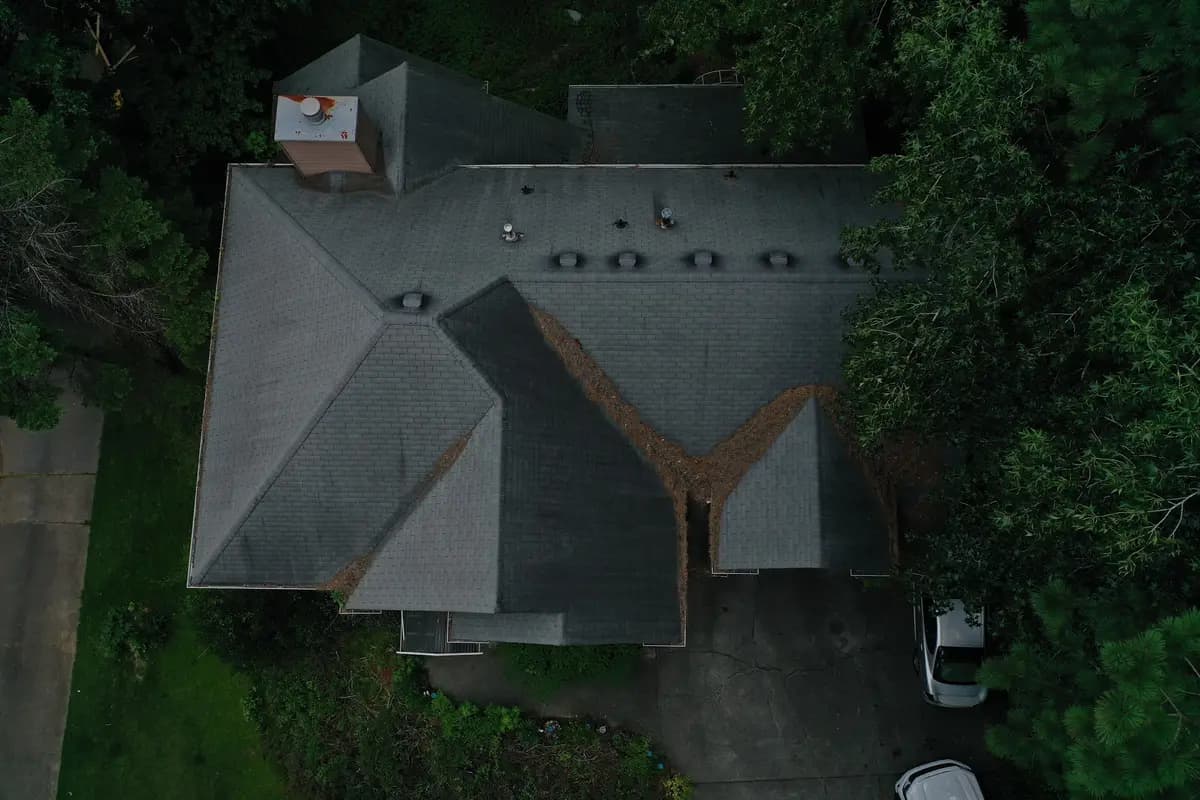
Clogged valleys top the list. The oaks and pines that were saplings when these subdivisions were built now shed straight into the valleys where two roof planes meet, and the debris dams water during a heavy rain until it backs up under the shingle edges. We clear the valley, check the metal or membrane beneath it, and replace any shingles and underlayment that have been sitting wet.
Limb strikes and wind-lifted shingles come next. A branch dropping in a summer thunderstorm can crack shingles or punch through the deck, and gusts break the seal strips on older shingles so they flap and crease. Around the chimneys, skylights, and many wall-to-roof junctions on two-story Johns Creek homes, we regularly find step flashing whose sealant has dried out and plumbing boots with split rubber collars that let water run down the pipe.
On shaded north slopes, moss and algae are the other steady request. Algae streaks are mostly cosmetic, but moss lifts shingle edges and keeps the mat damp, so we remove it and repair whatever it has loosened.
Tracing a Leak Through a Two-Story Johns Creek Home
In a tall house the ceiling stain is seldom directly under the breach. Water can follow a rafter or run across upper-floor framing before it shows, sometimes a full room away. We start inside, line the stain up with the roof plane above it, and then work through every valley, penetration, and flashing detail uphill of that spot.
When the source still hides, we water-test one section at a time while a technician watches from the attic. That keeps us from sealing the first suspicious spot and leaving the real opening for the next storm to find. You get photos of the cause and of the finished repair.
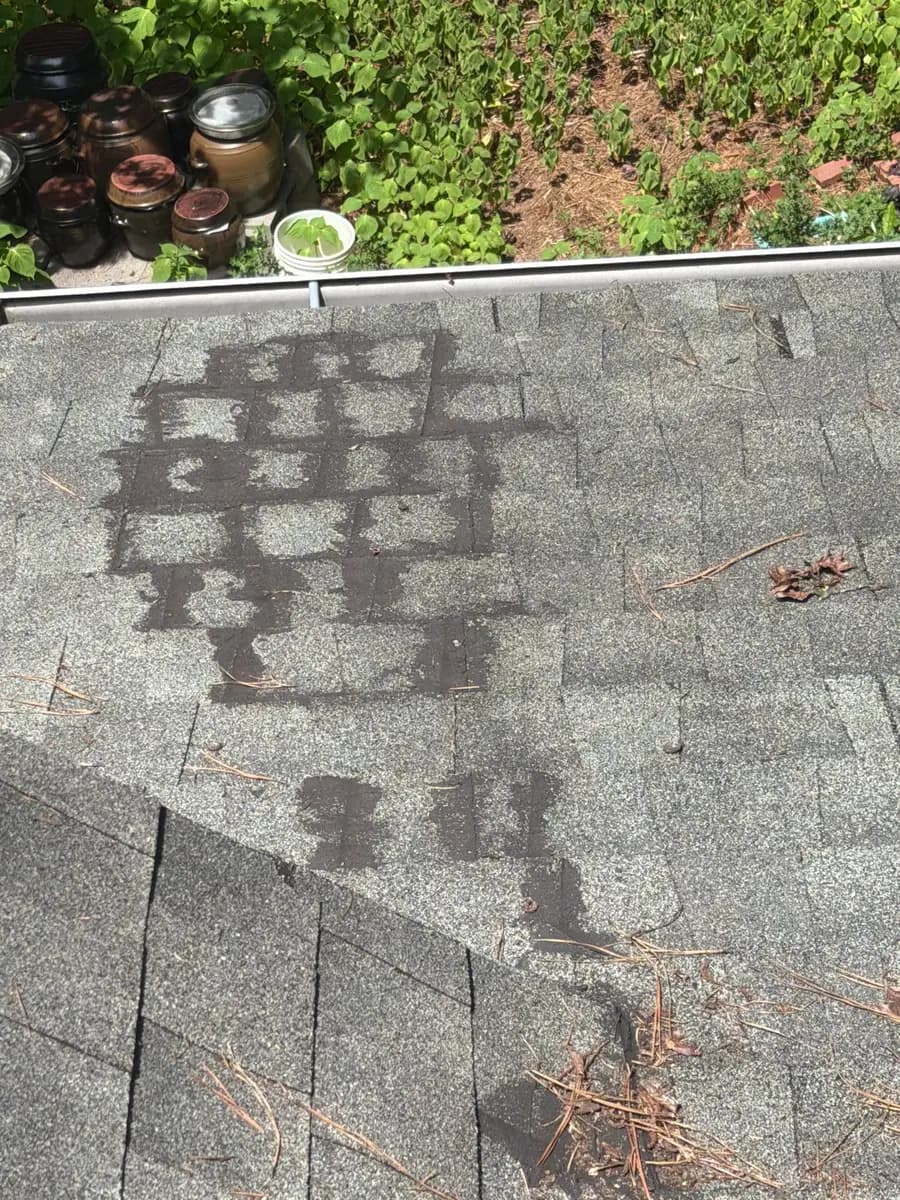
Storm damage calls for a different kind of look. Hail leaves bruised shingles with the granules knocked loose, plus dents in vents and gutters, while wind leaves creases and missing tabs. We mark and photograph every hit so you can decide, with the evidence in hand, whether a claim makes sense.
Repair or Replace a Roof From the 1990s
Age decides more Johns Creek repair calls than anything else. A repair is the right answer when the damage sits on one slope or a few penetrations, the decking is sound, and the shingle still has service life in it. Many roofs here went on with the house in the late 1980s or the 1990s, and by now the shingle is often past that point. Weathered, discontinued colors also make a clean match harder to find.
We will tell you which situation you are in. If the roof is healthy apart from a failed boot or a packed valley, we fix that and leave it there. If the granules are gone across several slopes and every storm brings a new drip, we show you the photos and explain why more patching would be money spent on a roof that is finishing its life.
Keeping Tree Cover From Turning Into a Leak
Most of the damage we repair in Johns Creek builds up slowly before it becomes a stain. Gutters that overflow every storm push water behind the fascia, and valleys that never fully dry rot the underlayment first and the decking after it. Cleaning gutters and valleys twice a year, in late fall after the leaves drop and again in early spring, heads off a large share of these calls.
After any notable hail or wind event, have the roof looked at within a few weeks instead of waiting for water inside. Hail bruising is hard to see from the ground, and leaving it unaddressed can cause problems with the shingle manufacturer’s warranty. Our post-storm inspections are free and come with photos.
Reaching Johns Creek From Canton
Johns Creek is about 35 minutes from our Canton home base, and our crews are on its roofs regularly. When a storm or a fallen limb leaves an opening, we can tarp it to keep water out until the permanent repair is made, and emergency roofing is one of the services we run year round.
Most repairs are finished in a single visit once the cause is confirmed. Each one carries a written workmanship warranty on the repaired area, and we use manufacturer-grade materials so the fix does not become the next weak spot. We are fully insured, family-owned across four generations, and have worked North Atlanta roofs since 2000.