Roof Maintenance
Black Streaks and Moss on Georgia Roofs: What They Are and What to Do
By David Blackwell · November 3, 2026 · 17 min read
Once the leaves come down in the fall, a lot of homeowners get their first clear look at the roof in months, and the calls follow. "There are black stripes running down my roof." "Is that moss up there?" These are some of the most common questions my crews hear, and the answer is usually less alarming than people expect.
Running our crews and the quality checks on every roof we install across Cherokee, Cobb, and North Fulton counties means I spend a lot of time looking closely at shingles under North Georgia tree cover. Here is what those streaks and green patches really are, which ones matter, how to clean a roof without shortening its life, and how to keep the growth from coming back.
Three Different Things Growing on Your Roof
When people say their roof is "dirty," they usually mean one of three things, and each calls for a different response.
Algae: the black streaks. Those dark stripes and stains are almost always algae. The Asphalt Roofing Manufacturers Association (ARMA) names Gloeocapsa magma as probably the most common of several species behind roof discoloration. The spores travel through the air, settle on the roof, and produce dark pigments that slowly turn a light gray or tan roof brown or black. It often shows up as streaks running down the slope, or as a broad dark shadow over one face of the roof. It is often mistaken for soot or dirt.
Moss: the green cushions. Moss is a real plant, and it grows in soft green clumps, usually along the bottom edges of shingles, in the gaps between them, and in valleys where leaves and pine straw collect. It loves shade and it loves staying wet.
Lichen: the crusty spots. Lichen looks like flat, pale green or gray-white circles, sometimes with a slightly leafy edge. It is a partnership between a fungus and an alga, and it grips the surface much harder than algae or moss do. Lichen grows slowly, so when you see it, it has usually been there a while.
Why Georgia Roofs Grow So Much of It
ARMA notes that algae discoloration has been most widespread in the Gulf States and along the Eastern Seaboard, especially where conditions are warm and humid. That describes our summers perfectly, and a few local factors stack the odds higher.
Humidity and slow drying. Our muggy mornings and long stretches of damp weather keep a roof surface wet for hours at a time. Algae and moss both need moisture, and a roof that stays wet longer grows more of them.
Shade from our trees. North Georgia neighborhoods are built under tall pines, oaks, and poplars. Oregon State University Extension, which studies moss on roofs in one of the wettest regions in the country, points to shade as the key ingredient and calls trimming back nearby trees the most effective long-term fix. On the roofs we inspect, the shaded slopes, and especially the north-facing ones that get the least sun, are nearly always where growth starts.
What the shingle is made of. Most asphalt shingles contain finely ground limestone (calcium carbonate) as a filler, and calcium is a nutrient for Gloeocapsa magma. That is part of why algae took off on asphalt roofs once that filler became common.
Spores from next door. Because algae travels on the air, an infected roof nearby can seed yours. That is one reason streaking tends to show up on several houses in the same neighborhood.
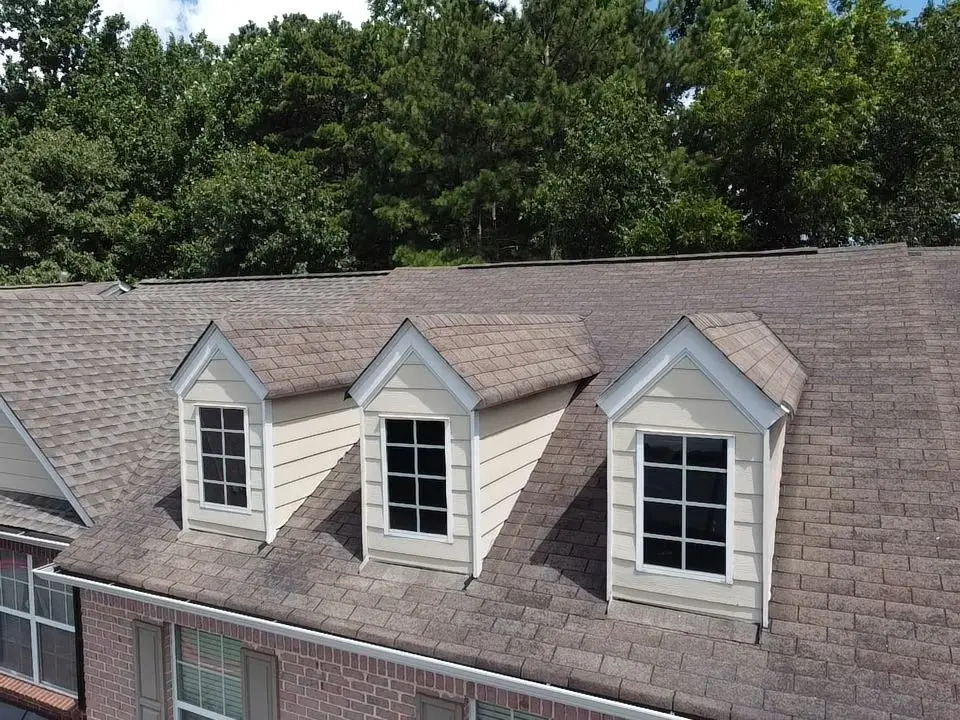
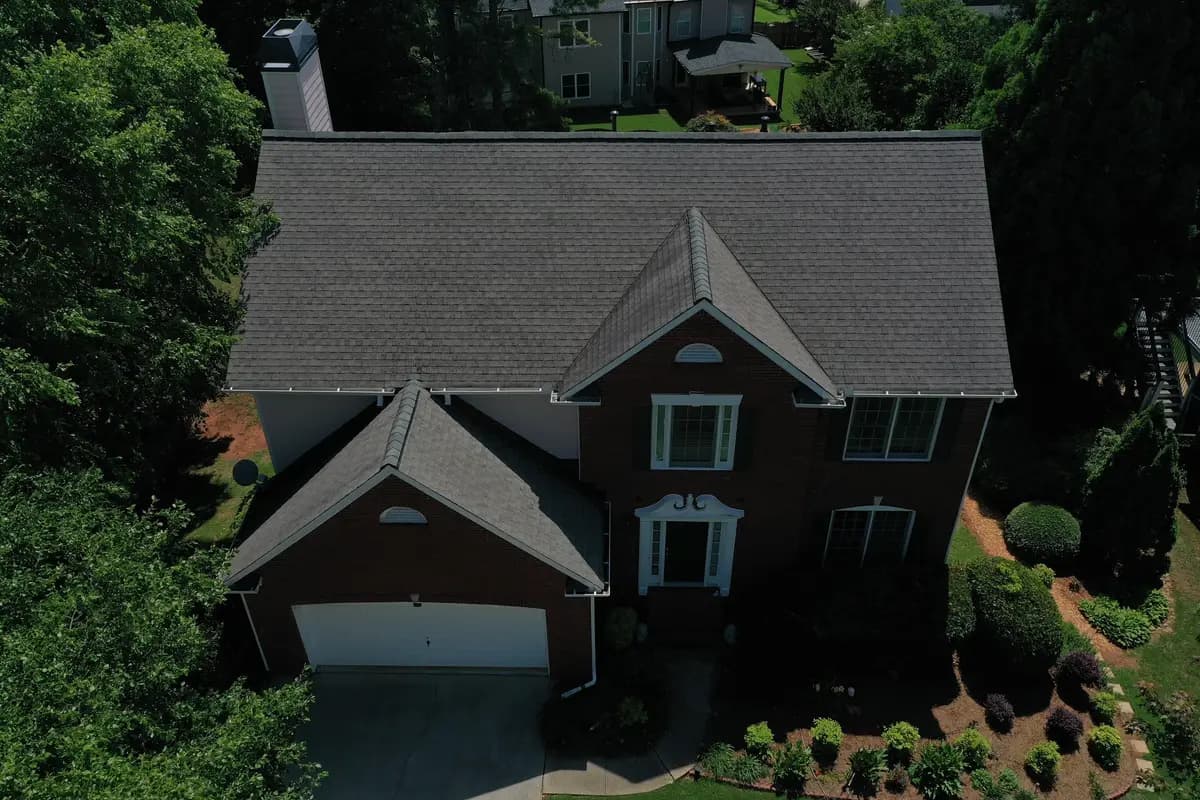
Photo: Platinum Roofing. Dark, blotchy staining across an older roof under tall pines in Alpharetta. Discoloration like this can be algae, worn granules, or both, and an up-close look is the only way to tell which.
Cosmetic or Damage? How to Tell
This is the part homeowners most want to know, so here is the straight answer.
Algae is mostly cosmetic. On its own, the black streaking does not crack shingles or cause leaks. It does make a house look older than it is, which buyers notice from the curb. If the streaks are the only thing going on, nothing on that roof is urgent.
Moss is where damage starts. Moss acts like a sponge. Oregon State University Extension notes that it traps soil and debris that hold moisture against the roof, and that it can lift asphalt shingles, which lets water get underneath into the layers below. Thick moss also clogs valleys and gutters, so water backs up where it should be running off. A few small tufts are an early warning. Thick mats along the shingle edges deserve a professional look.
Lichen is slow but stubborn. Lichen anchors itself tightly to the shingle surface. The bigger risk is often in removing it, because pulling it off can take the protective granules with it.
Staining that is not growth at all. Sometimes what looks like algae from the ground is actually granule loss: the shingle's mineral coating has worn away, exposing the dark asphalt underneath. That is a sign of age rather than something you can wash off. Rust-colored streaks below a vent or flashing point to corroding metal. Our guide to how long a roof lasts in Georgia walks through the other age signs you can see from the yard.
How to Clean a Roof Without Hurting It
If the streaks bother you, they can be lightened, as long as it is done the way the manufacturers recommend. The wrong method does more harm than the algae ever would.
ARMA's technical bulletin on algae discoloration lays out the approach. A typical solution is one part liquid household chlorine bleach to one part water, though mixing directions vary by shingle manufacturer and by how heavy the staining is (some manufacturers call for a weaker mix, so check yours). The solution is applied gently, left on for at least 15 minutes and no more than 20, and then rinsed off with a gentle spray of water. ARMA says not to scrub, because friction loosens granules, and not to use other chemicals or methods without the shingle manufacturer's approval.
A few practical cautions:
- The roof gets slippery. A wet, bleach-treated roof is dangerous to walk on. ARMA recommends working from a ladder or walkboards where possible and encourages using trained professionals. We agree. Please do not climb up there yourself.
- Protect the plants. Bleach runoff can burn shrubs and flower beds below the eaves. Wet the plants down before and after, or cover them.
- It will come back. ARMA is clear that cleaning is temporary and the discoloration will likely return. Cleaning buys you a better-looking roof for a while. It does not change the conditions that grew the algae.
The One Thing Not to Do: Pressure Wash
I understand the temptation. A pressure washer makes a driveway look brand new in an afternoon, so why not the roof? Because the colored granules on a shingle are not decoration. They shield the asphalt from the sun, and once they are gone, that spot ages much faster than the rest of the roof.
ARMA's bulletin puts it plainly: high-pressure washing is likely to damage asphalt roofing and should not be used on it for algae or for any other purpose. On top of that, the major shingle manufacturers exclude pressure washing damage from their warranty coverage, which we cover in our roof warranty guide. A pressure-washed roof can look great for a month and then show bare, dark patches by the next summer.
If someone offers to "power wash" your roof, ask what pressure and what solution they plan to use. A gentle, low-pressure wash with a manufacturer-approved solution is a very different job.
Moss and Lichen Need a Gentler Hand
Moss takes a little more care than algae because it is physically lodged between and under the shingle edges. Yanking it out by hand or scraping it off can lift tabs and break the seal strips that hold shingles down in the wind.
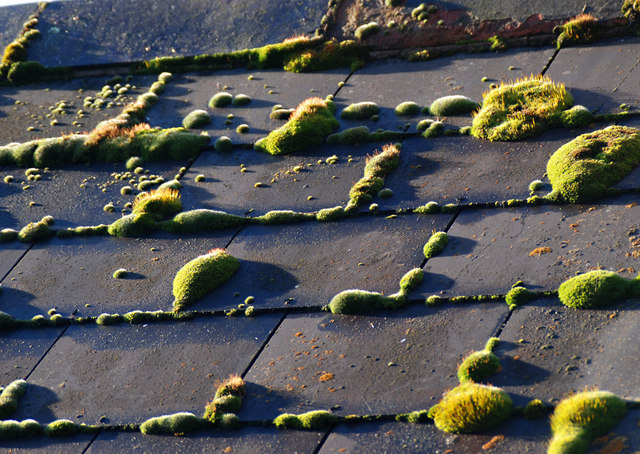
Photo: Dave Croker, via Wikimedia Commons (CC BY-SA 2.0). Shown to illustrate how moss settles into the joints and edges of a roof, where it holds water against the surface.
The safest approach is to treat it first and let it loosen, then remove what remains gently, working from the top of the roof down so you move with the shingle laps instead of prying against them. Oregon State University Extension cautions that poor technique can damage shingles and suggests calling a professional if you are unsure. It also warns that zinc-based moss treatments should not be used on a home with copper gutters, downspouts, or flashing, because zinc corrodes copper. Whatever product you use, check that your shingle manufacturer allows it.
Lichen is the hardest of the three to clear because it grips the shingle so tightly. Scraping it off usually takes granules with it, so aggressive removal can do the roof more harm than the lichen itself. If it is a few scattered spots on a sound roof, leaving it alone is often the better call. If it is widespread, have it looked at along with the rest of the roof.
Moss on the roof usually means moss and pine straw in the gutters too, and our article on how gutters protect your roof explains why that matters.
Keeping It From Coming Back
Cleaning treats the symptom. Prevention changes the conditions, and there are three good ways to do it.
Let the sun in. Thinning or raising the canopy over the roof is the single most effective long-term step for moss. A roof that dries quickly after a rain grows far less of anything. For large limbs, a licensed arborist is the right call.
Zinc or copper strips at the ridge. A strip of zinc or copper installed along the ridge releases small amounts of metal every time it rains, and that runoff slows algae and moss on the shingles below. GAF's installation instructions for its zinc strip note that protection only reaches the area below the strip, and that regrowth can occur more than about 14 feet down from the ridge, in which case a second strip about halfway down the slope is recommended. Strips do not remove existing growth, so the roof should be cleaned first. On heavily wooded lots, we can add zinc or copper strips at the ridge when we install a roof.
Algae-resistant shingles. This is where shingles have improved the most. Algae-resistant shingles blend in granules that carry copper, which is released slowly when the roof gets wet and keeps algae from taking hold. The warranties behind them have grown a lot longer, too.
Every architectural shingle we install includes algae-resistant copper granules. No shingle is permanently immune, and these warranties come with conditions (the right packaging, and in some cases matching hip and ridge shingles), but the difference on a shaded Georgia lot is easy to see a decade later. Our guide to the best roofing materials for Georgia's climate covers the other options, including metal, which does not grow algae at all.
When Streaks Mean the Roof Is Getting Older
Black streaks on a five-year-old roof are just algae. On an older roof, they are often one sign among several, and that is when it is worth looking closer.
If your asphalt roof is past about 20 years and you see streaks along with curling shingle edges, bare or bald patches, coarse granules piling up in the gutters, or thick moss lifting the shingle edges, the streaks are telling you the roof is in its second half. At that point, spending money on cleaning a roof that is near the end of its life rarely makes sense. Our articles on signs you need a new roof and roof repair versus replacement will help you weigh it.
On the other hand, plenty of streaked roofs have years of good life left. If the shingles are flat, the granules are intact, and no moss is lifting the edges, a gentle cleaning and a ridge strip may be all you need.
Book a Free Roof Check
Call us at (770) 419-5714, Monday to Friday from 8am to 6pm, or book a free roof inspection online. We will check the shingles, the granules, the moss, the flashing, and the gutters, and you get photos and a straight answer either way. If we find damage, our roof repair team can take care of it, and if the roof is ready for replacement, our residential roofing installs use algae-resistant shingles as standard. Want a ballpark first? Our instant roof quote measures your roof from aerial imagery and emails you a price range in about a minute.
Frequently Asked Questions
What causes black streaks on roofs in Georgia?
The black streaks are almost always algae, most commonly a species called Gloeocapsa magma. Its spores travel on the air, settle on the roof, and grow best in warm, humid, shaded conditions, which describes much of North Georgia. Its dark pigment shows up as streaks or stains running down the slope.
Are black streaks on my roof harmful?
Algae streaks are mostly cosmetic: they do not crack shingles or cause leaks. Moss is different. It traps water and can lift shingle edges, letting water reach the layers underneath, so thick moss deserves a professional look.
Can I pressure wash algae off my roof?
No. The Asphalt Roofing Manufacturers Association says high-pressure washing is likely to damage asphalt roofing and should not be used on it for any purpose. It strips the protective granules, and the major shingle manufacturers exclude that damage from their warranties.
How do you clean algae off a shingle roof safely?
ARMA describes a solution of household chlorine bleach and water, typically one part to one part, applied gently, left on for 15 to 20 minutes, and rinsed off with a gentle water spray. Do not scrub, and check your shingle manufacturer's directions first. The treated roof is very slippery, so this is a job for a trained professional.
Do zinc or copper strips really stop roof algae and moss?
They help. Rain washes small amounts of metal down from a ridge strip, which slows regrowth below it. GAF's zinc strip instructions say regrowth can occur more than about 14 feet down the slope, where a second strip is recommended. Strips do not remove existing growth.
Will a new roof stop the black streaks from coming back?
A new roof with algae-resistant shingles makes a big difference. Their copper granules slowly release copper when wet, and current lines from major manufacturers carry limited algae warranties of 25 to 30 years. No shingle is permanently immune, but every architectural shingle we install includes algae-resistant granules.

About the Author
David Blackwell
Production Manager at Platinum Roofing, running the crews and quality checks on roof and seamless gutter installations across Canton, Woodstock, and the greater North Atlanta metro. Meet the Platinum Roofing team →