Roof Maintenance
Getting Your Roof Ready for a North Georgia Winter: A Fall Checklist
By Robert Shelby · October 20, 2026 · 16 min read

Every year around this time, the calls we get start to change. Summer is all storm damage and hail checks. By late October, it is homeowners looking up at a roof full of pine needles and oak leaves and asking, "Is there anything I should do before winter?" There is, and the good news is that most of it is simple, inexpensive, and best done right now.
I'm Robert Shelby, a fourth-generation roofer and General Manager at Platinum Roofing in Canton. Our crews have been taking care of roofs across Cherokee, Cobb, and North Fulton counties since 2000, and fall is my favorite time of year to look at a roof. The weather is cooperative, the summer's wear and tear is easy to spot, and anything we find can be fixed before the rainy season settles in. Here is what a North Georgia winter really does to a roof, and the checklist we would walk through on our own homes.
Why Fall Is the Window
Most people think of summer as our wet season, with its afternoon thunderstorms. The numbers tell a different story. According to NOAA's official 30-year climate normals for Atlanta, October is the driest month of the year, averaging 3.28 inches of rain. Then the rain picks right back up: December, January, February, and March each average about 4.6 inches, and the five months from November through March bring roughly 22 inches, close to half of the year's total.
That is why fall matters so much. A small problem on your roof right now, a cracked seal around a pipe or a gutter packed with leaves, does not cause much trouble in a dry October. Give it four straight months of steady winter rain, though, and that same small problem has every chance to turn into a ceiling stain. Fall is the calm stretch where you can find it and fix it on your schedule instead of the weather's.
What Winter Actually Does to a Georgia Roof
We do not get the heavy snow loads that roofers up north deal with, so it is easy to assume winter is the easy season for a Georgia roof. It is easier, but it brings its own wear.
Long, soaking rains. Summer storms are loud and fast. Winter rain is different: a slow, steady soaking that can last all day and come back two days later. That kind of rain finds the weak spots. A hardened pipe boot or a lifted piece of flashing that shrugged off a 20-minute thunderstorm can let water seep in for hours during a January rain.
Freezing nights. Atlanta averages around 36 nights a year at or below freezing, and most of them land between December and February. Many of the suburbs we serve, away from the city's heat, often run a few degrees colder on a clear night than the airport station that the official numbers come from.
Cold matters because rubber and sealants stiffen as they get cold. A pipe boot collar that is already sun-baked and hairline-cracked from a few Georgia summers opens up a little more every time it freezes overnight and warms back up the next afternoon. Water that sits in a clogged gutter can freeze too, and a gutter full of wet leaves and ice gets heavy enough to pull away from the fascia board.
Wind and falling limbs. Winter cold fronts often blow through with strong, gusty winds. Shingles that lifted during a summer storm and never resealed are the first to go, and dead limbs over the house are the ones most likely to come down.
Moisture in the attic. When it is cold outside, warm, damp air from inside the house rises into the attic. If the attic is not ventilated well, that moisture condenses on the cold underside of the roof decking. Homeowners sometimes call us about a "leak" in February that turns out to be condensation dripping off nail tips. Our article on why attic ventilation matters in Georgia explains how a balanced intake and exhaust system prevents it.
Your Fall Roof Checklist: What You Can Do From the Ground
Please do not climb on your roof. Most of what matters can be seen from the yard, a window, or the attic, and the rest is what we are there for. Here is what to check this fall.
- Walk around the house with binoculars or your phone's zoom. Look for missing, lifted, or creased shingles, especially on the side that takes the wind. Look for dark patches, bare spots, or anything that looks out of line with the rest of the roof.
- Check the gutters and downspouts during a rain. Water spilling over the front edge of a gutter, or a downspout that barely trickles, means something is clogged. Make sure every downspout sends water at least a few feet away from your foundation.
- Look for granules. A handful of shingle granules at the bottom of a downspout is normal on a newer roof. Piles of them on an older roof are a sign the shingles are wearing out. Our guide to how long a roof lasts in Georgia covers the other age signs.
- Look at the trees. Note any limbs that hang over the roof or rest on it, and any dead branches above the house. Branches that rub the shingles wear them down, and they drop a steady supply of leaves into the gutters. A licensed arborist is the right call for trimming large limbs.
- Visit the attic on a rainy day. Bring a flashlight and look at the underside of the roof decking, around the chimney, and wherever a pipe or vent comes through. Dark stains, damp insulation, or daylight showing through are all worth a call.
- Look at your ceilings. A faint brown ring, especially in an upstairs closet or near an exterior wall, can be the first sign of a slow leak. Our article on why roofs leak explains why the stain is rarely right under the problem.
What We Check on a Fall Roof Inspection
A free roof inspection from our team covers the whole roof system, but in the fall we pay extra attention to the spots that cause winter leaks.
Pipe boots. Every plumbing vent on your roof is sealed with a rubber collar. Georgia sun hardens that rubber, and somewhere around year ten to twelve it tends to crack. It is the single most common thing we find, and one of the cheapest fixes, usually $150 to $400.
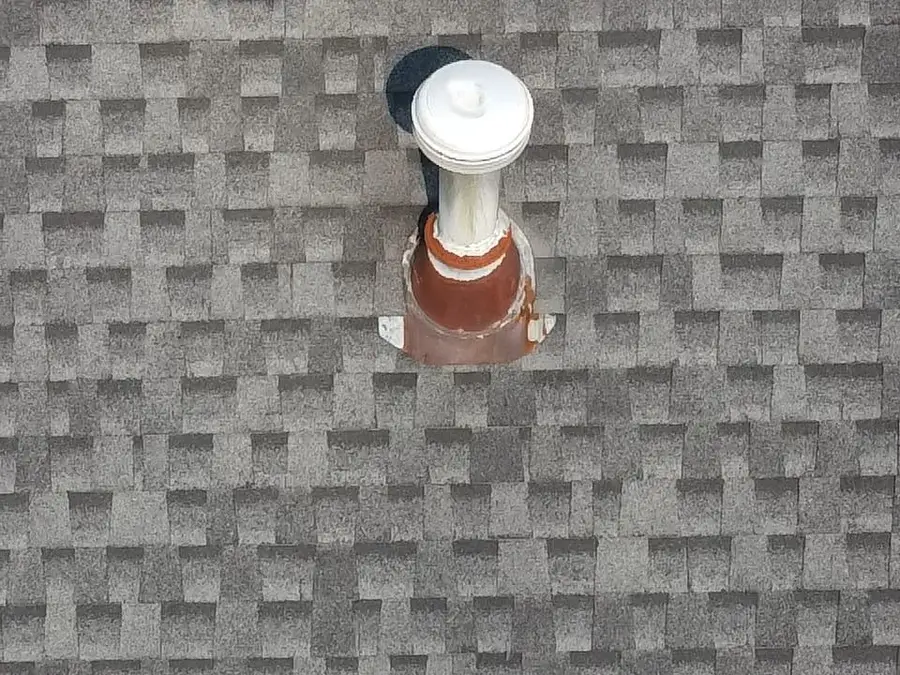
Photo: Platinum Roofing. A worn pipe boot we found on an Alpharetta home. The rubber collar around a vent like this is the most common source of winter leaks we see.
Flashing. Chimneys, walls, dormers, and skylights are sealed with metal flashing. We look for loose pieces, rusted metal, and a common shortcut: a thick layer of roofing tar smeared over a problem instead of a real repair. Tar dries out and cracks in a season or two, and it usually lets go during the first cold spell.
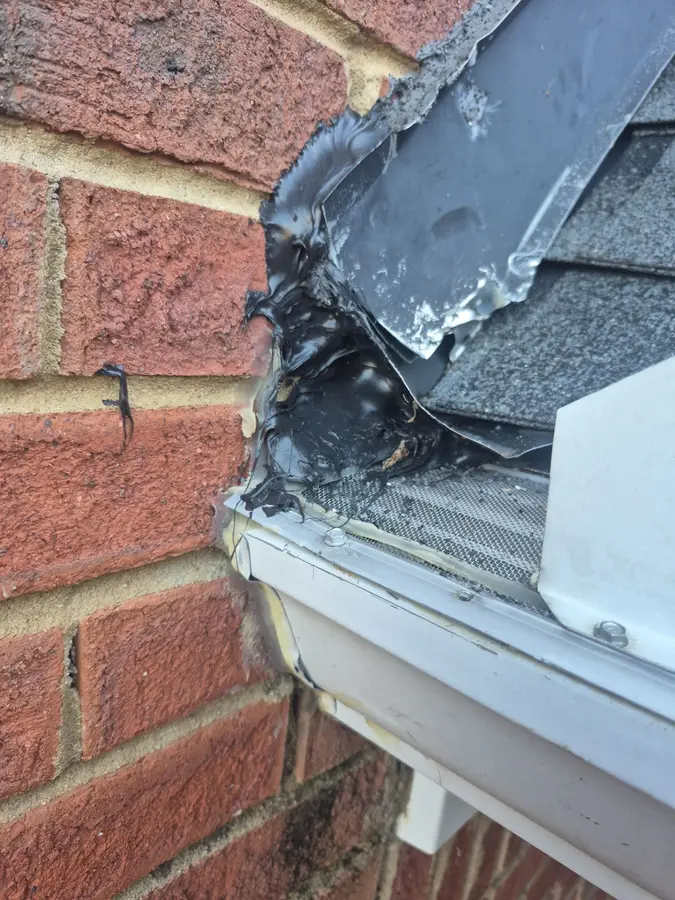
Photo: Platinum Roofing. Torn flashing patched with tar where the roof meets a brick wall on an Acworth home. We replace patches like this with properly installed metal before winter.
Shingles and nails. We look for shingles that lifted in summer storms and never resealed, nails that have backed out, and wind or hail damage that is easy to miss from the ground. Our guide to hail and storm damage shows what we look for.
Gutters and the roof edge. We check that the gutters are flowing, firmly attached, and pitched toward the downspouts, and that the drip edge and fascia behind them are not soft or rotting.
The attic. If you let us in, we check for stains, damp insulation, and signs of poor ventilation like rusty nail tips or frost on the decking.
You get photos of everything we find and a plain explanation of what needs attention now, what can wait, and what it costs. If the roof is in good shape, we tell you that too.
Gutters: Clean Them After the Leaves Drop
North Georgia's trees are a big part of why people love living here, and they are also the reason fall gutter care matters so much. Our oaks, maples, and sweetgums drop their leaves from late October into December, and loblolly pines shed a heavy layer of needles in the fall as well.
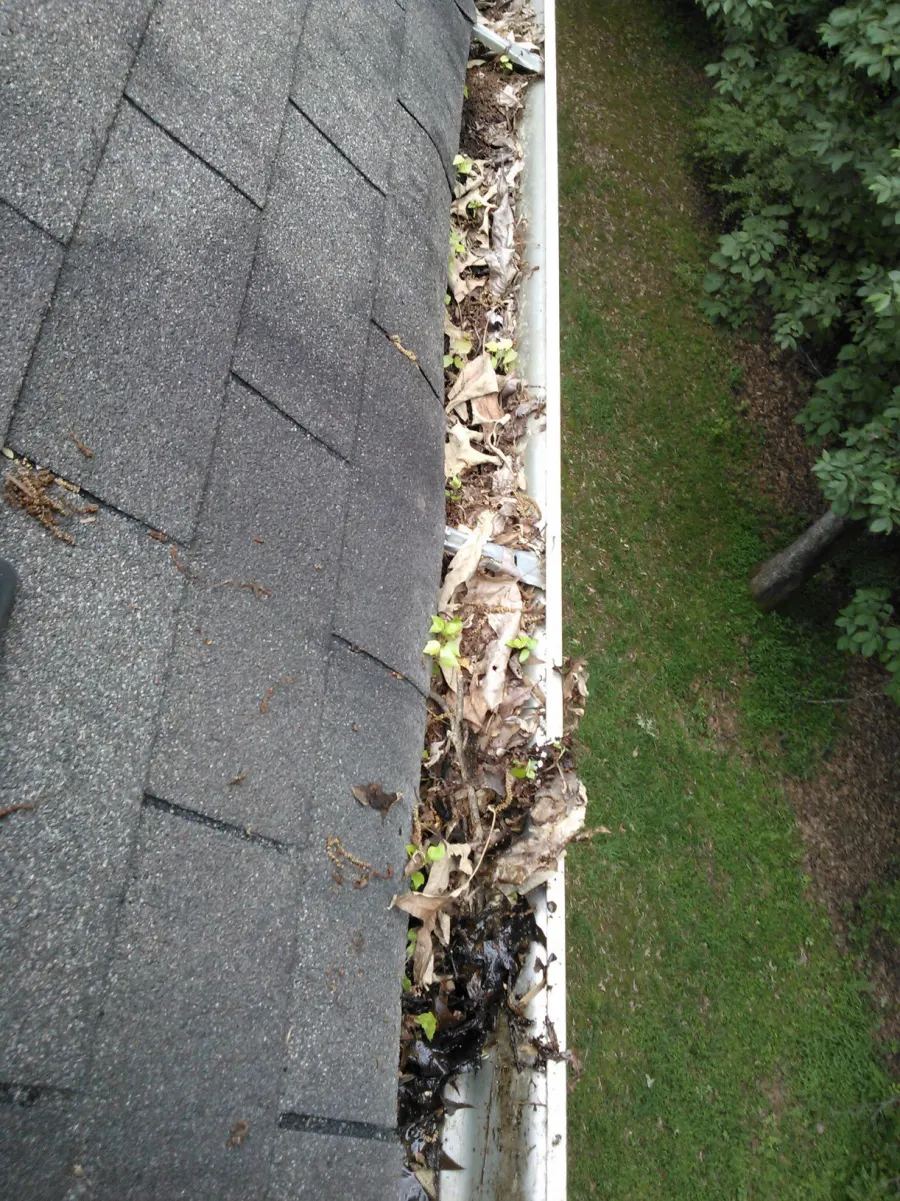
Photo: Randall1022, via Wikimedia Commons (CC BY-SA 3.0). Shown to illustrate a gutter packed with leaves and debris that needs cleaning before winter.
The timing tip we give everyone: if you are only going to clean your gutters once this season, do it after most of the leaves are down, not before. In much of our area that means late November or early December. Cleaning in early October feels productive, but the gutters can be full again a few weeks later, right as the winter rain starts.
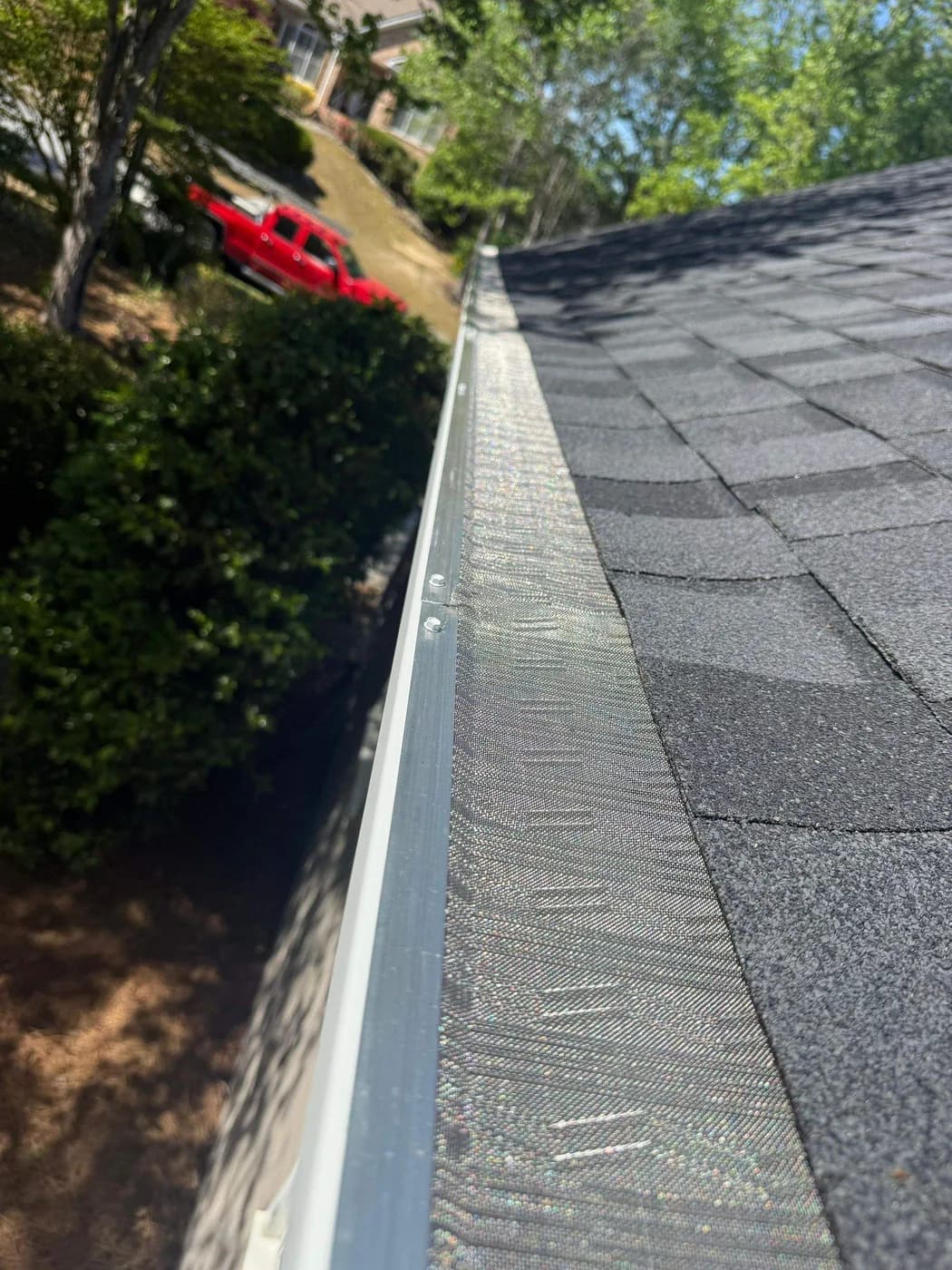
If you are tired of getting on a ladder every fall, gutter guards are worth a look. We install two systems, SmartFlow and LeafBlaster, and we will tell you honestly which one fits the trees around your house, or whether you need guards at all. If your gutters are undersized, sagging, or pulling away from the house, our seamless gutter installation service can fix the problem for good. Our article on how gutters protect your roof explains why it matters.
A Fall Repair Costs Far Less Than a Winter Leak
Most of what we find in the fall is small. A pipe boot is usually $150 to $400. Resealing or replacing a piece of flashing, securing a few lifted shingles, or reattaching a gutter typically falls in the few hundred dollar range, and most leak repairs in our area run $300 to $1,500.
The difference is what happens when that same small problem gets a winter to work on. Water that seeps in slowly from December to March soaks the roof decking, the insulation, and eventually the drywall. At that point, the roof repair itself is still about the same price, but now you may also be paying for new decking, insulation, and ceiling repair. Catching it in the fall keeps the bill small and keeps the work on your schedule.
When It Makes Sense to Replace Before Winter
Sometimes the fall inspection tells us the roof is near the end of its life: widespread granule loss, curling shingles, several aging pipe boots, or a history of leaks. In that case, patching every spot before winter may not be the best use of your money.
The good news is that winter is a great time to replace a roof in North Georgia. Shingles install fine in our weather, and winter usually has the most open dates on our calendar. A single-day replacement in December or January gets you ahead of spring storm season. Our guide to the best time of year to replace a roof in Georgia goes into the details, and how long a roof replacement takes walks through install day.
Book Your Fall Roof Check
Fall is the best time of year to get ahead of your roof. The weather is calm, the fixes are small, and you get to enjoy the holidays without wondering what the next rain will do.
Call us at (770) 419-5714 or book a free roof inspection online. We will check the pipe boots, flashing, shingles, gutters, and attic, and you get photos and a straight answer either way. If you are already thinking about a new roof, our instant roof quote measures your roof from aerial imagery and emails you a price range in about a minute. We serve Canton, Woodstock, Holly Springs, Roswell, Alpharetta, Marietta, Kennesaw, and the rest of our North Georgia service area.
Frequently Asked Questions
When should I get my roof inspected before winter in Georgia?
October and early November are ideal. October is the driest month of the year in metro Atlanta, so repairs are easy to schedule, and it comes right before the rainy months from December through March. An inspection now gives you time to fix anything we find before the steady winter rain arrives.
When should I clean my gutters in North Georgia?
If you clean them once in the fall, wait until most of the leaves are down, usually late November or early December in our area. Many homes with heavy tree cover also need a second cleaning in late spring after the pine pollen and oak tassels fall. Gutter guards can cut that down to an occasional check.
Do roofs leak more in the winter in Georgia?
Winter is when many slow leaks show up. December through March are some of the wettest months of the year in Atlanta, and winter rain tends to be long and steady, which gives water time to work through a cracked pipe boot or loose flashing. Freezing nights also stiffen rubber seals and sealants, which can open small cracks wider.
Can I do roof maintenance myself before winter?
You can safely check a lot from the ground: look for missing or lifted shingles, watch your gutters during a rain, look for granules at the downspouts, and check the attic and ceilings for stains. We do not recommend walking on the roof. Falls are a real risk, and walking on shingles can damage them. Leave the on-roof inspection and repairs to a licensed roofer.
Do ice dams happen in Georgia?
They are rare here, but they can happen during a hard cold snap, especially when gutters are packed with wet leaves. The more common winter problem in North Georgia is ice and debris weighing down gutters until they pull away from the house. Clean gutters and good attic ventilation are the best protection.
How much does a fall roof inspection cost?
Our roof inspections are free. We check the shingles, pipe boots, flashing, gutters, and attic, and you get photos of what we find and a plain explanation of what needs attention. Call (770) 419-5714 or book online to schedule yours.

About the Author
Robert Shelby
Fourth-generation roofer who founded Platinum Roofing in 2000. Meet the Platinum Roofing team →