Roof Repair
Skylight Leaks: Reflash, Replace, or Remove?
By David Blackwell · November 24, 2026 · 17 min read
A skylight brings daylight into a kitchen, a bathroom, or a dark upstairs hallway, and on a sunny North Georgia afternoon you can turn off half the lights in the room. It is also a hole in your roof, and like every other hole in a roof, it depends on a few pieces of metal and a seal or two to keep the rain outside.
Our crews handle repairs and full replacements, and I sign off on the quality check on each job. Once we find a skylight leak, homeowners ask the same question: fix it, swap it out, or get rid of it? The answer usually comes down to three things: the condition of the glass, the condition of the frame, and how many years your roof has left.
Where Skylights Actually Leak
When water shows up around a skylight, the unit itself gets the blame. In our experience, the glass is the culprit less often than people think. Here are the four places we check, roughly in the order we find problems.
Step flashing along the sides. The two sides of a skylight are sealed with step flashing: small L-shaped pieces of metal woven in with each course of shingles. When a piece is missing, bent, or nailed through during an earlier repair, water runs along the frame and into the opening. It is the same detail that seals a roof against a chimney or a sidewall, and our article on chimney leaks shows how it is supposed to look.
Head and sill flashing. The top of the skylight (the head) has to divert all the water coming down the roof around the unit, and the bottom (the sill or apron) has to carry it back out onto the shingles. Leaves and pine needles love to pile up at the head, holding water against the flashing every time it rains.
Counter flashing and curbs. Many older skylights in our area sit on a curb: a wooden box built up a few inches above the roof, with the skylight on top and metal counter flashing covering the joint. If the curb wood rots or the counter flashing works loose, water gets behind it. A good share of the tar-smeared skylights we see are curbs where someone tried to seal over a rotted box.
Failed seals and cracked glazing. This is the one that really is the skylight. Insulated glass is two panes with a sealed space between them. Skylight maker VELUX says condensation trapped between the panes means that seal has been broken. Older plastic dome skylights are a different story: in our experience, years of Georgia sun yellow and harden the plastic until it cracks. Either way, no amount of flashing work fixes a failed unit.
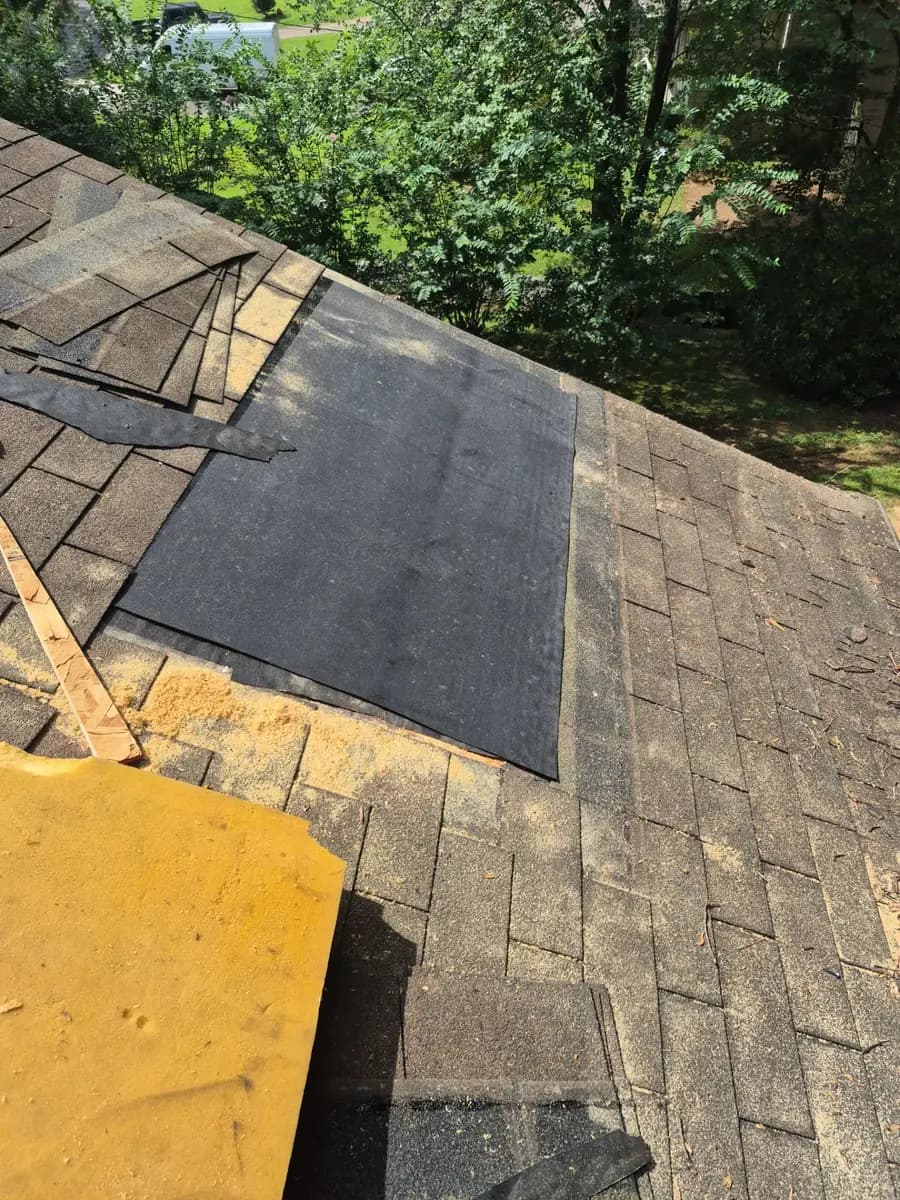
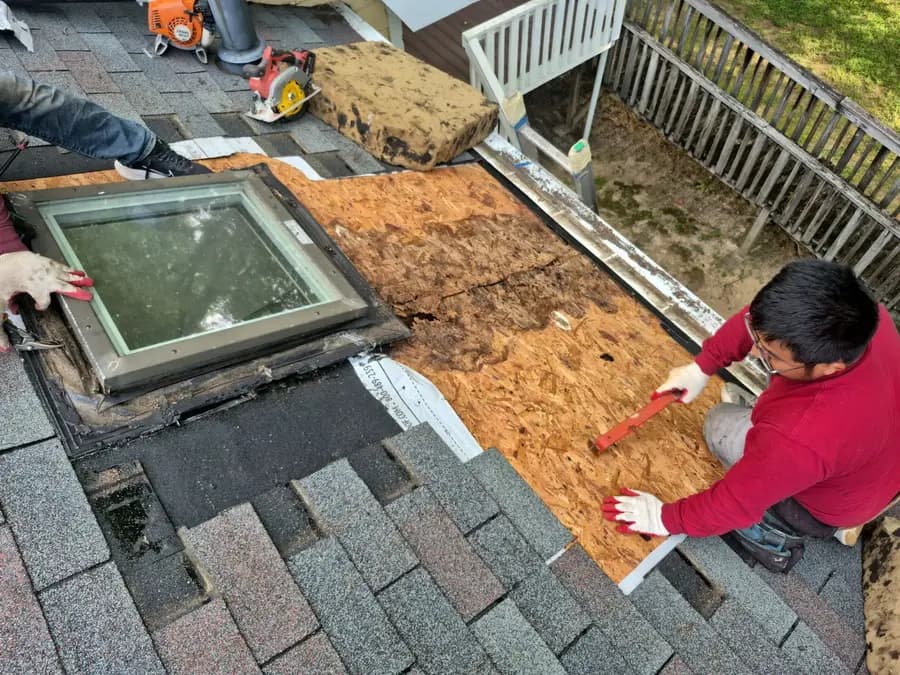
The photo at the top of this article is a good reminder of why skylight leaks are worth catching early. On that Dallas, GA home, the leak at the frame was small. The water it let in over a few years was not, and the plywood beside the unit had gone soft enough to break apart by hand. Our crew cut out the rotted decking and replaced it before the new flashing went on.
Condensation or Leak? How to Tell the Difference
Before anyone climbs a ladder, it is worth ruling out condensation. A fair number of the "skylight leaks" we are called out for each winter turn out to be water that formed inside the house, not water that came through the roof.
Warm, humid air from showers and cooking rises to the highest point in the room, and the skylight glass is the coldest surface up there. On a cold morning, that moisture turns to water on the glass and drips down the shaft. VELUX puts it plainly: condensation on the inside or outside of a skylight is normal, depending on temperature and humidity.
The clues are usually easy to read once you know what to look for:
- Watch the weather. Condensation shows up on cold, clear mornings and after a long hot shower, even when it has not rained in a week. A leak shows up during or right after rain.
- Look at the glass. Condensation beads evenly across the inside of the glass. A leak usually starts at one corner or side of the frame.
- Look at the stain. A leak leaves a stain on one side or corner of the shaft, often with peeling paint or soft drywall on that side.
- Look between the panes. Fog or droplets you cannot wipe off, trapped between the two panes, mean the seal in the glass has failed. That unit needs replacing.
If it is condensation, the fix is inside the house, not on the roof. Run the bath fan during and after showers, run the range hood when you cook, and make sure the skylight shaft is insulated and air sealed on the attic side. Our article on why attic ventilation matters in Georgia explains how the same moist air causes trouble in the attic, too.
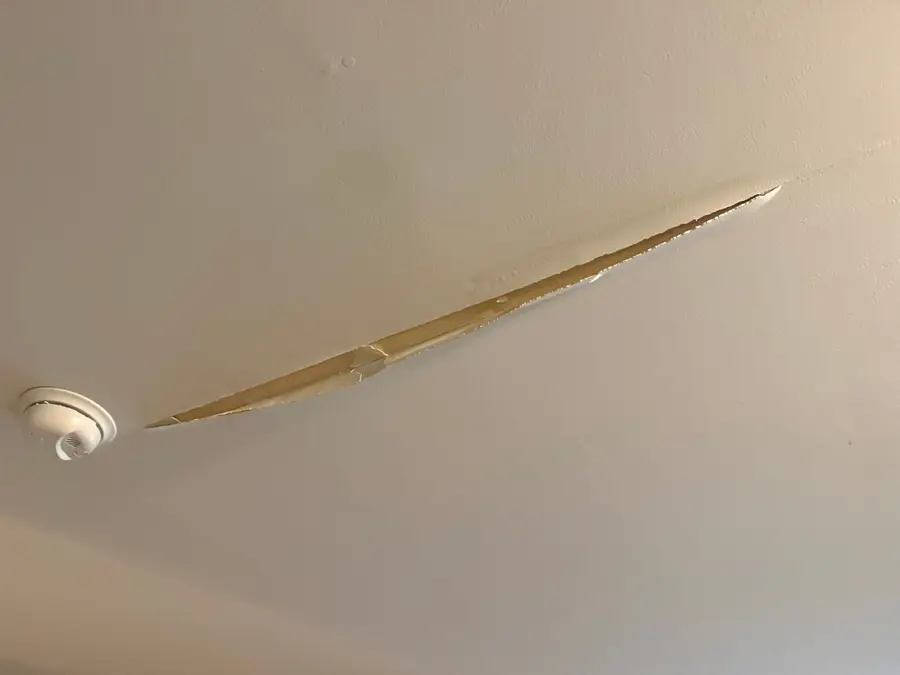
Photo: Platinum Roofing. A drywall seam that split open after a roof leak soaked into it on an Atlanta home. We traced the water on the roof, fixed the source, and the ceiling stayed dry.
Why Your Skylight Should Line Up With Your Roof
Here is the part most homeowners never hear until it costs them. A skylight and a roof age on different clocks, and the best time to deal with both is the same day.
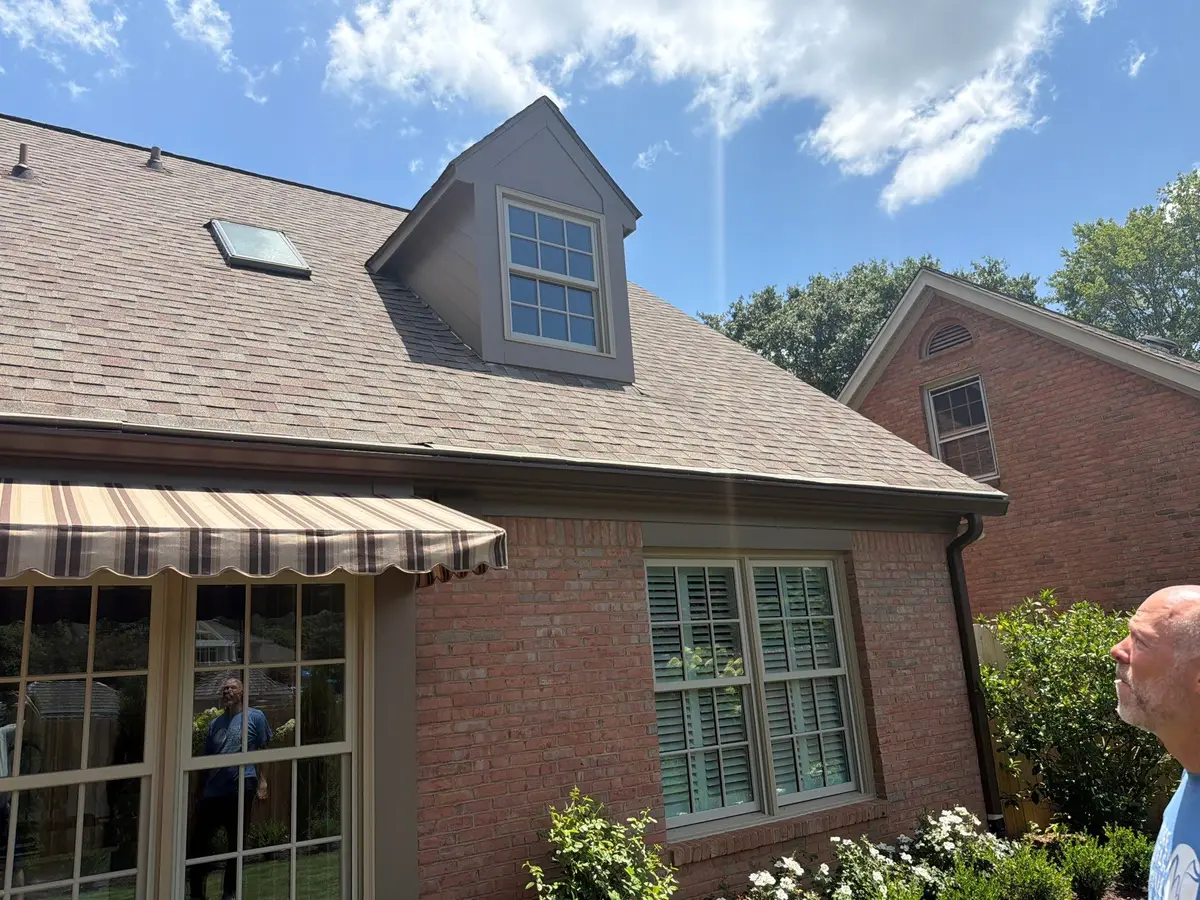
Photo: Platinum Roofing. A skylight beside a dormer on a Roswell home. A unit like this should be judged by its own age, not just the age of the shingles around it.
VELUX publishes a 10-year warranty on its skylights and their installation, a 20-year warranty against the glass seal failing, and 5 years on shades and controls. The company also notes that skylights built in the 1970s and 1980s were made to last about 10 to 20 years, while modern units can go 30 years or more. Compare that with your shingles. As we cover in how long a roof lasts in Georgia, 3-tab shingles usually last 15 to 20 years here, and architectural shingles last 22 to 30.
Picture the common case: a house built in the early 2000s, original skylights, getting a new architectural roof today. If we reflash those 20-year-old units into the new roof, the shingles may have 25 good years ahead while the glass seals are near the end of theirs. When one fails in five years, replacing it means cutting into a roof that is still nearly new.
That is why VELUX's own guidance says the best time to replace a skylight is when you replace your roof. The flashing has to come off and go back on during a re-roof either way, so the labor overlaps, and the new skylight and new roof start their warranties together. VELUX also notes that only its skylights installed with its own flashing qualify for its weathertight coverage, which is one more reason to replace the flashing kit with the unit rather than reuse old metal. If warranties are on your mind, our roof warranty guide explains how the shingle side of the coverage works.
Your Three Options: Reflash, Replace, or Remove
Once condensation is ruled out and we know where the water is getting in, nearly every skylight lands in one of three places.
Option 1: Reflash the Skylight
Reflashing means we remove the shingles around the skylight, pull the old step, head, and sill flashing, and install new metal with a fresh layer of self-adhering underlayment around the frame. The skylight stays put.
This is the right call when the unit itself is healthy: clear glass with no fog between the panes, a solid frame, and water that is clearly coming in around the edges rather than through the glass. It also makes the most sense when your roof still has plenty of years ahead, because there is no re-roof coming soon to do the job alongside. Skylight flashing work sits toward the higher end of the $300 to $1,500 range that most leak repairs in our area fall into, as we cover in our guide to common roof leak sources. The final number depends on the size of the unit, the pitch of the roof, and whether we find soft decking once the shingles come up. If we do, replacement plywood runs about $70 to $100 per sheet.
One honest caution: a reflash fixes the flashing, not the glass. On a 20-year-old skylight, we will tell you the seals may be the next thing to go.
Option 2: Replace the Unit
Replacing means a new skylight and a new flashing kit, set into the same opening or one adjusted to fit. It is the answer when the problem is the skylight itself: fog trapped between the panes, cracked or yellowed glazing, a frame that has rotted or warped, or a curb that has gone soft.
It is also our most common answer when a homeowner is replacing the roof and the skylights are original to the house. The flashing is coming off anyway, the crew is already up there, and everything starts fresh together. If your house sees hail, ask about laminated glass. VELUX notes that its hail coverage applies only to skylights with laminated glass.
Option 3: Remove the Skylight and Deck Over
Sometimes the best skylight is no skylight. If the room does not really need the extra light, if the unit has leaked again and again over the years, or if you simply want one less thing on the roof to maintain, we can take it out entirely.
We remove the unit, frame the opening, sheath it with new decking, and shingle straight over it so it disappears into the roof. Inside, the old shaft gets closed in with drywall, so plan on a drywall and paint finish in the room below. Removal makes the most sense as part of a roof replacement, when the shingles around the opening are coming off anyway and the patch blends right in.
Many homeowners land somewhere in between. On a house with three skylights, it is common to replace the one over the kitchen and deck over the two in rooms that never needed them.
What We Check on a Skylight Call
We start inside, with the shaft, the stain pattern, and the glass, then check the attic side of the opening. On the roof, we look at every piece of flashing, the shingles above the head, and any old tar patches that tell us someone has been here before. You get photos and a plain answer: condensation, flashing, or the unit itself, and which option fits. If the roof is near the end of its life, we say so, because that changes the answer. Our article on roof repair versus replacement explains how we make that call.
Get Your Skylight Checked
A leaking skylight is one of the more satisfying fixes we do, because the answer is usually clear once someone looks at it from both sides. Catch it while the leak is small and it is a straightforward roof repair. Line it up with your next roof and you get one job, one clean install, and warranties that start on the same day.
Call us at (770) 419-5714, Monday to Friday from 8am to 6pm, or book a free roof inspection online. We will check the skylight, the flashing, and the rest of the roof, and you get photos and a straight answer either way. If you are already planning a new roof, our instant roof quote measures your roof from aerial imagery and emails you a price range in about a minute. We serve Canton, Woodstock, Holly Springs, Roswell, Alpharetta, Marietta, Kennesaw, and the rest of our North Georgia service area.
Frequently Asked Questions
Why does my skylight leak only when it rains hard?
Heavy, wind-driven rain overwhelms flashing that is loose, bent, or missing a piece, and debris piled at the top of the skylight dams water against the head flashing. A leak that appears only in hard rain almost always points to the flashing, not the glass.
Is water on the inside of my skylight a leak or condensation?
If water beads evenly across the inside of the glass on cold, dry mornings or after showers, it is almost always condensation from humid indoor air. A leak shows up during or after rain and usually stains one corner or side of the shaft. Fog trapped between the panes is a third case: the glass seal has failed and the unit needs replacing.
Should I replace my skylights when I replace my roof?
In most cases, yes, especially if the skylights are original to a home that is 15 or 20 years old or more. The flashing has to come off and go back on during a re-roof anyway, and VELUX recommends replacing skylights at the same time so the new unit and the new roof start their warranties together. If your skylights are fairly new and in good shape, we can reflash them into the new roof instead.
Can a leaking skylight just be resealed with caulk?
Caulk is a short-term patch, not a repair. Georgia sun dries it out and it cracks within a season or two, and caulking from inside only hides the water while it keeps soaking the framing. A lasting fix means new flashing installed the right way, or a new unit if the skylight itself has failed.
Can you remove a skylight and roof over it?
Yes. We remove the unit, frame the opening, cover it with new decking, and shingle over it so it blends into the roof. It is easiest and looks best when it is done during a roof replacement. Inside, the old skylight shaft needs to be closed in with drywall and finished.
How much does it cost to fix a leaking skylight?
Most leak repairs in our area run $300 to $1,500, and skylight flashing work tends to be toward the higher end of that range. The price depends on the size of the skylight, the pitch of the roof, and whether the decking around it needs replacing. Replacing the unit costs more because it includes the new skylight. Our inspections are free, so call (770) 419-5714 and we will give you an exact price after we look at it.

About the Author
David Blackwell
Production Manager at Platinum Roofing, running the crews and quality checks on roof and seamless gutter installations across Canton, Woodstock, and the greater North Atlanta metro. Meet the Platinum Roofing team →